Something from nothing …

In The Art of the Start, Guy Kawasaki (founder of garage.com, one of the earliest ‘business angels’) talks about bootstrapping your startup i.e. starting it on a shoe-string …

… he then proceeded to start his own Web 2.0 startup (perhaps only mildly successful, although he did manage to sell it for an undisclosed amount in 2009), called Truemors for only $12,000 (you can read about it, in this excellent post)!

Now, Guy could afford to spend millions, yet he chose to bootstrap, because it made good, commercial sense NOT to spend more.

For most startups, bootstrapping is a necessity, yet how little you spend up front may not have any detrimental effect as far as the success of your business goes, as the HotOrNot.com video above clearly demonstrates.

BTW: to prove that point, Hot or Not was (reportedly) acquired for $20 mill. not long after this video was shot.

My point: don’t let lack of money be your excuse for not starting your own business!

The one question that you should ask, before you ask your question!

Now, that’s a circular headline: The one question that you should ask, before you ask your question!

It’s because Consumerism Commentary has shared his experiences in customer service:

The prevailing wisdom when dealing with customer service representatives is to just keep repeating “let me speak to your supervisor” until you eventually get what you want. Every time I read this, though, I get defensive and annoyed. I can’t forget that year I spent answering the phones for Bank of America … I learned a couple of very important lessons as a CSR that are in direct conflict with the “let me speak to your supervisor” rule.

His rules are good … and, basically involve trying to make the customer service representative on the other end of the phone line your “friend” which (he says) usually results in not only getting his issue/s resolved but also getting “fees reversed, special deals made, you name it.”

Now, I can’t argue with that!

Well, I could, since I employed well over a hundred staff in call-centers across three countries … but, I won’t 🙂

But, I will say that there is one question that you should ask as early on as you can politely work it into the conversation with ANYBODY that you hope to ‘get something out of’ e.g

– The customer service representative at the store or on the phone where you hope to have a problem resolved

– The person at the bank who you are sitting in front of to negotiate a new loan

– The customer sitting across the desk from you (or on the other side of the telephone line) when you are trying to make a sale

– The sales rep at the dealership where you are trying to negotiate a “super, great deal” on that new fridge, car, house, etc.

– and, so on …

… particularly, when you know (or, as soon as you are told) that you are ‘pushing the envelope’ with your request.

This one question that I am about to share with you will save you hours and hours of going around in circles trying to ‘close’ whatever deal you are working on (in your favor, of course!), before you have to finally resort to asking to “speak to your supervisor” … and, have to start all over again!

What’s the question?

Simple: “Do you have the authority to [insert: request of choice]?”

A word of warning: you don’t ever want to question somebody’s status, so be subtle and choose the right moment and way to ask this?

For example, in a sales situation, a really neat way to ask this same question without the running the risk of being thrown out of Mr-Lower-Middle-Manager-Who’s-Job-It-Is-To-Keep-People-Like-You-Away-From-The-Real-Decision-Maker’s office, is to politely and innocently enquire:

“Who do you usually like to talk to before you make decisions like this one?”

That’s who you want to speak to right off the bat … not Mr Peabody 😉

You get one shot …

Who was it that said: “you get one shot at making a first impression!”?

This is no truer than in marketing:

– You research your market,

– You target your audience,

– You create a great campaign,

– And, then you send this e-mail campaign out:

We Love Your Blog!!!

[AJC: So far, I’m hooked!]

I’m writing to inform you that [websitename] has been featured on Guide to Online MBA’s Top Personal Finance Blogs list found here:http://www.guidetoonlinemba.com/tips-and-tools/personal-finance-blogs. We’ve gone through and hand-picked a list of our favorite personal finance blogs and outlined the unique reasons why we like them.

[websitename]?!

How’s that for a credibility-killer; naturally I shot back an e-mail of my own:

Dear [spammersname],

“I’m writing to inform you that [websitename] has been featured …”

LOL … and, thanks!

The website owner kindly – and, quickly – wrote back … and, it was all a mail-merge error, etc., etc.

Too late, the marketing campaign is already shot … don’t let this be you 🙁

Footnote: If you check out the “hand-picked” and “unique reasons” why they apparently like my blog, they say my blog “discusses financial strategies for earning $1 Million a year” x 7 years = $7Million7Years (!) … a research genius at work! 😛

You gotta have a hobby …

I don’t collect bees!

My hobby is personal finance: talking about it, writing about it, reading about it, thinking about it …

… strangely enough, making money is actually not my hobby [AJC: although, I far prefer it to the alternative ;)] although making money gives me the credibility to do the talking/writing.

Anyhow, one of my latest readings is a series of e-mails that is a section-by-section delivery of what Malcolm Hughes also sells as an eBook.

Presumably, when reading these e-mails, you will get SO EXCITED that you won’t be able to wait for the next FREE e-mail, so you will fork out your money for the eBook – ‘Millionaire Stealth Secrets’ Handbook.

Surprisingly, I found that I can wait 😉

For a ‘Millionaire Handbook’, there’s actually NO advice on making/keeping money that I can see, unless you count e-mail upon boring e-mail of goal setting / visualization / dreaming mumbo-jumbo as ‘millionaire advice’.

In fact, the first piece of sensible advice that I can see is the following passage from the 28th e-mail in the series (!):

Listen to this…   Every single hugely successful person in the history of mankind has failed at least once. In many ways, they had to in order to succeed. Richard Branson [billionaire founder/owner of Virgin Records/Airlines/Credit Cards/etc./etc./etc.] was almost put out of business by the Royal Mail strikes of 1971. His mail order record business relied on the post to make money. Instead of ruining him, it made him stronger and he began opening his record shops. He was also nearly liquidised by Coutts Bank for being £300,000 in overdraft!

But whatever had happened, there would still be a Richard Branson. In fact, if Coutts Bank HAD liquidised him, he might have been even richer by now! You see, what CAN happen to a person when he/she fails is that he/she realises at least 3 things that he/she would not have realised had he/she not failed.

1.      Money is actually easily replaceable

2.      There is nothing to fear about failure

3.      Failure is SOMETIMES necessary and ALWAYS fruitful

Fear of failure is one of the key hold-backs that stops people from stepping out of their comfort-zone, so this is good – and true – advice.

Unfortunately, IMHO the rest is BS 🙂

Dress to suit your audience …

I’m sure that Miley thinks she looks great … and, I’m DEFINITELY sure that her audience does, otherwise why would they come to her concerts in droves? It sure ain’t for the singing 😉

But, as cool as she may (or may not) be … she had better not be dressed like that when she’s going for:

– a job interview

– a bank loan (well, in her case this might be OK)

– a sales presentation

– etc.

In other words, it’s not important how you look, but that you fit in with how your audience EXPECTS you to look.

When we have a Life’s Purpose that transcends ‘today’, you can make these kinds of short-term trade-off’s – you know, the “but my friends are all …” kind – because you KNOW that you have a long-term pay-off (your Number/Date, allowing you to live your Life’s Purpose, which probably includes your dream lifestyle) that your friends are simply unlikely to ever achieve!

Let me give you an example of dressing (or presenting yourself) for your audience:

When I first started in business, I had three modes of dress:

– Smart casual for my clients, who were all tradesmen: I wanted to dress nicely (to present a good image) but not ‘stuffy’

– Suits for my corporate clients: my other business was much more corporate; whenever I had a client meeting, I would dust off my ‘power suits’ and ties (nowadays, you can dress more casual, but ONLY if your client does, also).

– Suits WITH gold watches/cuff-links/jewellery: for my meetings with the bank … I always want to leave my banker with the impression that I don’t NEED the money 😉

Now, this doesn’t mean that you can’t dress like Johnny Rotten after hours!

If that’s your ‘thing’ go right ahead … I mean, you gotta live, right?

BUT, make sure that your fashion accessories of the bodily kind can be TOTALLY hidden from view, come Monday!

Body piercings are fine; tongue/eyebrow/lip/ear piercings are not.

Small earings are fine; multiple piercings and ear ‘plates’ (the ones that enlarge the holes on your ears) are not.

Hidden tatoos are fine; visible ones are not.

Why?

Because the majority of people who you NEED to help you become successful (bankers, clients, partners) are nowhere near as broad-minded as you think!

Now, before you accuse me, my staff broke all the ‘rules’ … but, I was able to look beyond the physical (even if I had to endure a raised customer eyebrow or two), but don’t limit your market to me and the two other CEO’s out there who are as broad-minded as I am.

Let me give you another example:

A close friend of mine is CEO of a small public company. Interesting.

What his clients don’t know is that he has wall to wall tattoos on his body. Amazing.

BUT, he has to keep his shirt buttoned up (including his neck) and his sleeves all the way down to hide them … I guarantee that he regrets his tattoo decision for this reason.

So, that’s the sad truth about freedom of self-expression today; maybe it will change in a few years, maybe it won’t. Just don’t take the risk, if you want to reach your Large Number by Your Soon Date … it’s probably not worth it.

BTW: Nowadays, I don’t dress to impress anybody …

… on the other hand, I’ve already reached my Number. Have you?

A question I’m not sure I should answer …

Sometimes, I’m posed a question that I’m not sure that I should answer.

Case in point: Drew asked a question about my 7 Million Dollar Journey :

What were the terms of your first $1.25 million building purchase in 2001? You mentioned you had been in debt and had been losing money in your business until sometime in 2000 when you began to turn a profit. You had to have had a lot of profits quickly to put together the down payment for the building and be approved for a loan in such a short time period after years of money losing operations.

A straight-forward question, but the answer isn’t straight-forward … there’s a question of ethics and also a question of giving my readers potentially dangerous strategies.

After much uhmm’ing and aah’ing, I’ve decided that honesty is the best policy and to throw it to my readers to decide on the issues of ethics and danger:

As I mentioned, I had only recently become profitable, yet I managed to:

1. Stump up the 25% deposit on a $1.25 million commercial real-estate purchase,

2. Make the mortgage payments,

3. Make the additional lease payments on the $400k rehab and fit-out required.

Quite a tall order, so here’s how I managed it:

First, I made sure that I was profitable enough to:

i) Make the mortgage payments as and when due,

ii) Keep up with the lease payments,

iii) Pay back the deposit

Did you catch that?

Number (iii), I said: “Pay back the deposit”

You see, I actually borrowed 100%+ (i.e. the deposit, the mortgage set up fees, and the closing costs), but here is where the question of ethics and danger come into it …

… I borrowed the deposit and the closing costs from my customers!

And, here’s where ‘ethics’ come into the picture – my customers didn’t know!

You see, one of the easiest, best, but most dangerous ways to raise money, is to raise it from your customers.

How?

It’s actually quite simple: most businesses have large inventories (the goods that you hold in stock), accounts payable (money that you owe your suppliers) and accounts receivable (money that your customers owe you).

Any and all of these have value.

For example, it’s quite a normal/accepted practice to borrow against the value of your inventory; unfortunately, your bank may not want to take the risk, and your finance broker may only give you a little money at a high interest cost because of the perceived risk (after all, do they really know how to sell the inventory if you default?).

It’s also quite normal to leverage the value in your receivables by approaching a specialist finance company to ‘factor’ those debts: that means that instead of waiting 4 to 6 weeks for your customers to pay, the finance company may advance you up to 80% of the value of those debts (i.e. your total receivables). This is, in fact, one of the businesses that I still own.

But, there is a third method that requires no bank or finance company to get involved: it’s simply to pay your suppliers slower than your customers pay you!

My business, being a services business had no stock (so no inventory finance opportunity), and factoring can have the stigma of a weak business so I didn’t want to go that route with my ‘Fortune 500’ corporate clients.

But, I did have a very tight contract that saw my largest clients paying my invoices in just 7 days (really!), yet I was only obligated to pay my suppliers in 30 to 60 days. Further, my turnover was huge (compared to my fees) because of the nature of my business.

This meant, effectively, that I had a line of finance equal to 3 to 7 weeks of my sales/turnover!

That was more than enough to raise the deposit for the building.

OK, back to my initial reticence to share this with you:

1. In most businesses, the turnover isn’t large enough, and the negotiated spread between accounts payable/receivable large enough to raise very much cash,

2. I think it’s ethical to use these funds for your business (unless you have lead your customers to believe that these funds are to be, somehow, quarantined and/or held in trust), borderline to use them for the building that houses the business (for example is the building going to be bought in the name of the business, or in a separate entity as I would normally recommend?), and unethical to use them for personal use / purchases outside the business … but, ethics is in the eye of the beholder, so YOU tell me what you think?!

3. I think it’s dangerous because your business MUST have the necessary solvency (not just profitability) to not only keep up with the payments (both mortgage and lease) as well as to ‘buy back’ the deposit over a relatively short period of time (in my case, 12 to 18 months).

So, now you are armed with a powerful – and dangerous – business financing tool. Use it wisely … and, sparingly!

10 Paths To Wealth?

Ken Fisher is a well-known money manager – I know, because I’ve had to endure phone call after phone call when I stupidly signed up for one of his ‘free’ reports!

However, watching this video (and, maybe even buying his book) seems like a fairly non-threatening way to learn some of his wisdom.

Personally, I think you need to mix’n’match some of these methods to have a bats-chance-in-hades of making your Large Number / Soon Date.

On the other hand, I’m all for marrying into wealth, but who’d have me? 🙂

The No Marketing Plan!

I hate budgets.

I hate plans.

Most of all, I hate marketing plans!

So, let me tell you about Brandon: he is one of the principals of an interesting Angel Investing firm-with-a-twist. On his company’s blog, Brandon offers some of the best advice for testing your new business idea that I have ever read.

Not only that – like all GREAT ideas – it’s simplicity in itself … here’s what Brandon says:

Let me sum this up in one sentence:
As a startup or new business, the amount of time you spend writing up a sexy business plan to pitch investors would be better spent running a $500 PPC campaign testing your idea.

[Note: PPC = Pay Per Click online advertising]

You are lucky enough to live in a world with Google Adwords.  This is a good thing.  The costs of launching a new business online are hastily reducing to zero.  Testing a business idea or even a half-baked, half-assed business-sorta idea, is easy.  So do it.

Stop thinking about writing a business plan (that you mostly copy of some web template – be honest), and start here:

1. Register a domain name.  Doesn’t have to be good.  Starting a bird feeder biz?  Get birdfeederdepot1.com.
2. Get hosting, install the CMS [e.g. WordPress or Blogger] of your choice.
3. Make 3-4 landing pages.  Ask questions.  Find out some key answers to the market you are hoping to serve with your genius new idea.  Offer to sell your service right now.
4. Setup [a Google] Adwords campaign and spend $500.
5. Read the answers you get.  Scour the analytics, the keywords and clicks.  Any sale or response is good.  Email your new ‘customers’ and find out more about them.

The point is, this is so easy and cheap to do, you should do it.  There’s no risk in doing so, and the upside is possibly priceless.

It could save you from wasting 9 months of your life chasing a bad idea.  It could teach you what people really want, not what you think they want.  It makes you get serious.

Brilliant!

Home Business Success?

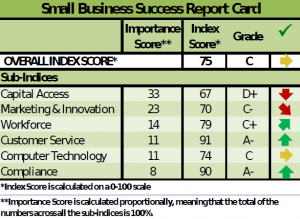
Andee Sellman, friend and occasional $7million7years contributor, refers to the Small Business Success Index study saying:

There are about 6.6 million home based businesses that generate at least 50% of the owner’s household income.

Now, assuming that home based businesses have either no – or very few – staff, I think that means that there are about 18 million home based businesses that are generating less then half the owner’s household income.

Now, think about this: the chances are that the whole household has a maximum of two full-time salaries – IF the owner of the small business runs it purely after hours …

… so, most home based businesses are making less than one full-time salary.

Let’s look at the most successful 6 million of these businesses: what are the chances that many of them are doing much better than “50% of the owner’s household income” – or, a maximum of one full-time wage (but, probably, much less!)?

Not much, I would think.

Now, there are exceptions: if you say that Facebook was a home-based business when it started … or, Apple … or, Google. But, most are just small online/offline concerns … low cost, low revenue, low return.

Chances are, you aren’t going to earn a lot from it, or sell it for a lot.

So, what’s the value of starting a home based business?

Well, unless you’re one of the very lucky ones, it’s in what you do with:

1. What you earn: this is extra income (assuming that you just haven’t thrown your old job in until it replaces your income … plus more) that you SHOULD be investing 100% of (some back into the business … some into outside investments, RE is ideal because the extra business cashflow can help fund any shortfall in the first few years), and

2. What you learn: there is no better way to learn about business than by running a business (preferably, with the resources of sites like Andee’s to help you); sure, my son made a couple of grand between the ages of 12 and 14 running his little eBay business from home … but, the lessons that he learned – not just business lessons, but Life lessons – will become priceless!

No, Michael Masterson’s 50%+ compound growth rate is reserved for businesses that can grow rapidly, have intellectual property that is both desired and protected, and have owners who are inspired by their Life’s Purpose to reach extraordinary heights …

… but, even the most humble home-based business can be a huge turning point in your financial life.

I highly recommend that you give it a go … and, keep trying until you find The One that helps you reach your Number 🙂