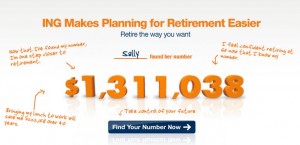
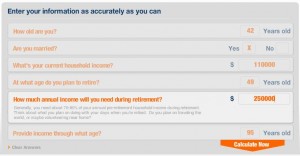
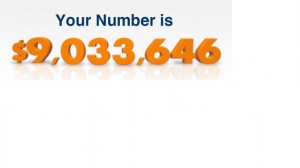
How to make 7 million in 7 years …

The upside down car?

carpark

Trees Full of Money shows us how to deal with a situation where we’re ‘upside down’ on our car loan:

If you can no longer afford your “upside down” vehicle, here is a a better way to get out of your loan:

Step 1
The most important step in unloading a vehicle with negative equity is to accept the situation for what it is. Saying “if I sell my vehicle now I’ll lose money” is not a plan. The quicker you sell your “upside down” vehicle, the less money you loose due to further depreciation.

Step 2
The second step in selling an “upside down vehicle” is deciding on a fair market value. Lately, the value of used vehicles has been just as volatile as the stock market or the price of oil. The fair market value of your vehicle may be significantly more or less than used vehicle pricing guides such as NADA and Kelly Blue Book suggest.

Step 3

Once you’ve established a competitive price, you need to secure funding for the difference between what you owe and what the vehicle will bring.

Step 4
Once you have met the obligations of your loan, it’s time to do a little marketing and salesmanship. I little effort in the marketing of your vehicle can pay huge dividends.

Step 5
When you have identified a prospective buyer for your vehicle, be sure to ask your bank how to proceed with the transaction. Each state has different laws so be sure to contact your state’s motor vehicle division as well.

[AJC: If you do want to sell your financed vehicle, I recommend that you read the full post here, as I have only extracted TFoM's highlights]

But, where is Step 6??!!

It should be the one that says: how do I buy a replacement vehicle?

You see, unlike many things that you may choose to own, a car is probably a necessity … now, that doesn’t mean that you need the best car, but you do need a car that can achieve [Insert objective of choice: get to/from work; haul stuff around the farm; schlepp the kids; etc; etc].

So, what do you do?

Well, you first try as hard as you can NOT to get yourself into a financed vehicle in the first place …

… you see, almost anybody who has a financed vehicle is in a negative equity situation:

- As soon as you walk a new car off the lot it has depreciated 10% to 30%, yet you still owe 100% – deposit + payout costs on the loan,

- If your loan is longer than a year or two, the car is probably depreciating at a faster rate than you can pay down the loan.

If you’re not convinced that you are already ‘upside down’ on your loan, ask for a ‘payout figure’ from your finance company – this is the amount that they would expect in a check today to hand over the title to the vehicle to you ‘free and clear’ – and, get ready to choke! Go on, try it …

So, don’t get yourself into this predicament!

But, if that is the only way that you can get into your first set of wheels (is it really, truly the only way? Or, are you just kidding yourself?!), or you are already into a financed vehicle, don’t sweat it.

Just take a look at your current monthly payments and the payout cost … if you can payout the vehicle and buy a cheaper one with cash, go for it. But, the chances are you will need to hang onto your current vehicle, as long as you can afford the payments.

Now, if you can’t afford the payments and you ARE upside down on the loan (as you surely will be), you will need some help to negotiate your way into handing back the vehicle, walking away from the loan and finding a way to start again. Now, that’s a whole can of worms that you just don’t want to open …

… so, next time you’re thinking of upgrading your car with a nice little “low-interest dealer loan” … don’t ;)

401k … a means or an end?

There’s still this general expectation that if you earn an income then you will have a 401k … it’s seen as an ‘end’ rather than the ‘means to an end’ that it really is.

Let’s look at the advantages:

1. Tax free on deposits into your 401k … ‘boosts’ your investment buying power by up to 25% to 35%

2. Possible employer ‘match’ … further ‘boosts’ your investment buying power by up to 50% to 100%

Now, let’s look at the disadvantages:

a) Generally, limited investment choices (e.g. managed funds)

b) High fees (both explicit and hidden)

c) Restricted access to your money until government-managed ‘retirement age’

d) A fairly low ‘cap’ on amounts that may be invested

But, similar lists of advantages and disadvantages can be draw up for ANY form of investment, tax scheme, etc. etc. …

… it’s just that we mostly don’t bother. We blindly accept the 401k as the ONLY way to go.

Ryan says:

I share your distaste for 401Ks, and their fee’s and penalties, but I have to believe that there is some advantage to having tax shelters (be them 401k or not). Otherwise, won’t the government just take all of your hard earned (and passively earned!) money?

Ryan’s right … the Government WANTS you to pay tax, but only the minimum that you NEED to pay … they don’t expect a penny more. The problem is, the government is only interested in the tax portion of your personal ‘Profit & Loss’ … YOU should be concerned with all of it!

As Scott says:

Robert Kyosaki states that the wealthy aren’t the one’s paying the lion’s share of the taxes. The middle and upper middle class do.

A 401k, ROTH, ROTH IRA, etc., etc. are all simply methods of protecting assets from taxes to a greater or lesser extent …

… the problem is not with these ’shelters’ in themselves, it’s in their design. You see, they were designed for the ‘average American’ to encourage them to save for retirement.

You and my other readers are probably NOT average Americans – if you are like me, you are aiming for a Number in the millions – and will surely hit the ‘roof’ (i.e. the maximum amount that the Government ‘allows’ you to sock away during any one year) of these vehicles very quickly, as your income starts to sky-rocket from Making Money 201 activities …. then, once you achieve your Number, the limits that you can have socked away will mean little to your Making Money 301 wealth preservation strategies … it’s why I don’t even bother!

It doesn’t mean that you shouldn’t tax-protect your money …

… it’s merely that Scott has hit the nail on the head: these aren’t the ONLY tax shelters available, or even the BEST tax shelters available.

For example, and as Robert Kiyosaki suggests, investing in income-producing assets via corporate structures (LLC’s; trusts; C- and S-Corporations; etc.; etc.) and taking advantage of all the tax deductions available to you (e.g. depreciation, 1031 Exchanges; etc.; etc.) will blow away any ‘tax advantages’ of 401k’s and similar (even WITH the ‘free’ money from the employer match factored in).

So, let’s not put the cart before the horse:

- FIRST look at the types of investments that you need to make in order to reach your financial objectives – be they long term (i.e. your Number) and/or short-term (e.g. flipping a house / trading some stocks and options)

- THEN look at the best ‘vehicle’ to house them in.

As an extreme example, if you decide that a business is the way to go – and, put up 100% of your savings as ’seed’ capital’ – then having a 401k is hardly going to help you, is it?

Blindly setting up a 401k first, then seeing what investments you are allowed to make in them is putting the cart well before the horse!

What price Russian Roulette?

If you scroll forward to about the 3.5 minute mark and start paying VERY CLOSE ATTENTION you will hear Warren Buffett impart one of the most important Making Money 301 lessons that you will ever hear …

[AJC: The lesson is simple: STOP WHEN YOU HAVE ENOUGH!]

… it might also help to explain to my friends why I am not rushing out to find “the next big thing” and why I have decided to limit my ‘venture capital-style’ investments to no more than $150k each (and, preferably ~$50k for each of my internet startups); then again, I don’t give my friends the same information that I give you … that would make me insufferable ;)

If you only take away one thing from this whole post, let it be these wise words paraphrased from Warren about certain ‘greedy rich people’:

To make money that they don’t have but don’t need, they risk what they do have and do need.

Can you see the idiocy in that?

If so, then you truly understand why I ask you to find your Number: it’s the ultimate antidote to playing Russian Roulette with your own finances!

You might want to screen the advice from your ‘experts’ a little better …

You can’t fully accept Charles Darwin’s Evolution Theory until you explain the Bombardier Beetle; equally, you can’t fully accept Larry Swedroe‘s support of Modern Portfolio Theory [MPT] until you explain Warren Buffett …

… having said that, perhaps I was little harsh when I suggested to my blogging-friend Pinyo that:

You might want to screen the advice from your ‘experts’ a little better …

But …

Larry Swedroe is a guest expert on Pinyo’s Blog, and Larry has published a number of books – including a highly-regarded one on the ‘workings of the stock market’ – so, I read the post with interest; it was a response to a reader question:

How can a person justify support of modern portfolio theory [MPT] when there is a Warren Buffett in this world?

Firstly, you already know my views on MPT and the so-called Efficient Market Hypothesis, which basically says that everybody has access to the same information (illegal trading based upon insider-information, as well as scamsters like Messieurs Ponzi and Madoff, aside) so, stocks must be priced correctly at all times.

Which doesn’t mean that you can’t buy ‘cheap stocks’ from time to time (e.g. now), but more that you can’t beat the market … nobody can, and if someone can, it’s either luck/randomness or can’t be predicted up front.

So, how do you ‘explain’ a Warren Buffett (or, the others)? Or, is this a case of the ‘exception proves the rule’?

First, it was no surprise to see Larry answer the question, in summary, as:

That is an easy question to deal with. First, with thousands or millions of investors we should expect some to outperform the market every year and some to do so for many years, randomly. The question is: Is there any more persistence of performance than would be randomly expected. The evidence from hundreds of academic studies is there is not.

Another answer to the question is that Warren Buffett is not the typical investor. He is not like a mutual fund manager. He often buys companies and then manages them. He provides them with economies of scale, lower cost of capital and the benefits of his managerial wisdom. And when he takes large positions in companies he often gets a board seat. So perhaps his great returns are more a result of his managerial skills than his investment skills, or some combination of both.

When I got this question a few years ago I went to do a simple check on the performance of Berkshire Hathaway for the prior ten year period and then compared it to the five major U.S. asset classes of large, small, small value, large value and real estate. During that period BRK had underperformed all but the asset class of large stocks (as represented by the S&P 500) and had underperformed an equally weighted (20% each) portfolio of the five that was rebalanced annually by several percent.

So we know that Buffett had delivered great returns in the past but we don’t know that he will in the future. In fact, during that ten year period BRK underperformed. So now what would you forecast regarding the future?

So, Larry answered the questions along the following lines:

1. Warren’s performance could be random – but, we already know that’s not the case, and I pointed Larry to the scientific study (http://7million7years.com/2009…..or-a-fool/) proving that Warren’s performance is no fluke, it’s simply only explainable by skill.

2. Warren often buys companies and actively manages them – this is true, for 78 of his investments, but not true for all of his stock holdings (in companies such as Coke, Kraft, etc.); he may – or may not – take board seats, but the reality is that he runs a hundred billion dollar company employing thousands of staff with only 19 people to apply all of his ‘managerial skills’; no, what Warren has is a system to effectively use excess cash from an already well-performing business to buy more (a perpetual money machine on steroids!).

3. Warren underperformed the market for 10 years – Warren agrees! He had too much cash and prices (as ‘perfectly and efficiently and modernly’ priced as surely as they must have been?!) were way too high … cash under-performs stock in a rising market. Let’s rerun that study over the next 20 years and see who wins?

4. We can’t use Warren’s past success to predict his future success – Oh yes we can; if Warren’s success is based upon skill, not luck, and the fundamentals of the market that have allowed that skill to succeed in the past are mostly true in the future, then of course Warren will be more successful in the future.

After some back and forth, Larry changed his ‘story’ somewhat:

I think we can agree on two key issues. Buffett’s record is almost certainly the result of skill. But the market’s have become much more efficient over time and the size of his assets under management make the challenge of beating the market now so much greater. Even Buffett himself has made this last point.

The other point is this. Likely we will see another Buffett 20 years from now, but there is no way to identify that person TODAY, we will only know who that person is ex post.

Now, it seems, Larry agrees that Warren isn’t a random aberration, he is skillful, but that will be less important as time goes on. Well, I agree – and, more importantly, Warren does also agree, to a point: Warren says that the smaller investor (around $1 Mill. to invest) should be able to beat him (hence the market) because Warren’s investments are getting too, d*mn big and he can’t move in/out of positions as quickly as he used to (well, more in than out as he is strictly ‘buy / hold’).

Larry, if Warren’s return via Berkshire Hathaway was 21%+ over the past 40 years, do you really think it will suddenly drop below 11%+ (or whatever the ‘market return’ happens to be) over then next 40? You may say “I don’t know …” (which is your point, I believe) …

… so, here is the kicker: if Warren felt that he could no longer beat the market, he would issue dividends!

Warren wouldn’t risk decreasing his shareholder returns by having them sit in cash or in BRK performing no better than the market – unless, he was expecting to be able to expend this vast ‘war chest’ on future ‘bargains’ – when he could just issue excess cash / profits as dividends and let the shareholders invest in a market-matching Index Fund, presumably at much lower overhead cost than Warren’s BRK can provide.

Therefore, Larry, I can confidently predict that Warren will beat the market (say, over the next 20 or 40 years), simply by ensuring that I invest with him until he changes his mind (on his dividend strategy) ;)

The point that Larry SHOULD be making is that this is not a common result … so, for the ‘average investor’, simply plonking all of the funds that you have earmarked for stock investing (e.g. in your 401k) into a simple, low-cost Index Fund – and, waiting 30+ years for Modern Portfolio Theory to run it’s ‘magic’ – will provide the best ‘bang for buck’ stock market performance that you need.

Rich Dad. Rich Kid?

theaddamsfamily-011Let’s not mince words: by most measures The AJC Family is Rich!

But, does that mean that our children are rich? Does it mean that Mom and Pop will buy them cars, vacations, etc.?

The inspiration for this post comes from a comment (on a post by Diane about her car), where Debbie says:

I think most 16 year old’s get cars these days.

I had one before I turned 17, although I had to pay for it with my own money and get my own insurance (but I think the trend is now parents buying their kids first vehicles and insurance from what I’ve been seeing and in fact- I wrote a post about how teenagers are in the perfect position to put aside some money during their high school years on Wisebread.com and do you know the comments I got?!

Parents saying that the idea was ridiculous, kids shouldn’t be expected to save the money they earn on jobs nor would they do it if they understood the value of compound interest and how much those first few thousands would be when they were ready to retire; if kids work during the summer how will they take trips to Europe and attend soccer or music camp, etc. I am still in shock!)

I must admit that I am in ‘shock’ as well …

… but, this brings me to an interesting point: how do ‘rich parents’ bring up their kids?

After all, when you all reach your Number, maybe you need some guidance as to how YOU should face these same issues?

All I can tell you is what we do:

We are in one of the highest socio-economic levels, yet our children (11 and 14 years old) already know that if they want cars, they will need to buy their own. We will contribute (prob. up to 50%) … but, they will need to save up their portion and fund the running costs.

I’m guessing that most of you reading this blog had to do it the same way (?) … at least we had to, so why shouldn’t they?

We feel that just because your parents are ‘rich’ doesn’t mean that YOU are … at least these are the conversations that we have with our children ;)

Why?

We feel that the best FINANCIAL gifts that we can give our children are:

a) Teaching them to take sole responsibility for their own financial situation, and

b) Teaching them how to become rich on their own

… we hope, leading them to the type of confidence and independence that only self-sufficiency can provide.

Think about the second one: what an advantage is it to have parents who have gone from $30k in debt to $7million in the bank? It’s got to be better than reading a blog, or having an occassional mentor … of course, the disadvantage is the child’s natural inclination to rebel from their parents, so, we add a couple of extra advantages:

c) We pay for their formal education. 100% … no “if’s” and “but’s”, for any course, in any reasonable location (we’re not sending them to Switzerland to go to Finishing School!) as helps them achieve their academic goals … but, only their first ‘real’ degree. If they want to sacrifice current earning potential for future by earning Masters, PHD’s, and/or MBA’s, that’s their financial trade-off to make, and

d) [AJC: This is the secret advantage that we do NOT tell them about up front] They will never starve … if all else fails, we are their Safety Net. But, they will not be able to “mooch off the folks” … this is simply an ‘insurance policy’ against disaster.

To that, we add all the ‘normal’ non-financial parenting, PLUS the luxuries of private schooling; after-school activities; bedrooms with private bathrooms, robes and studies (equipped with MacBooks, of course!) for each; as well as the swimming pool, tennis court, travel, etc. lifestyle that living in a ‘rich household’ provides …

What do you do (or plan on doing) with your children?

Exciting Money Making Opportunity? Horses …

horsesassThanks to all of those who responded asking for further information on this Exciting Money Making Opportunity! But, applications – for suckers – are now closed ;)

It seems that the ‘scam radar’ of my regular readers was well and truly up [AJC: And, I didn't even have to publish on April 1st, like I was first planning ... too obvious, huh?]; take Rick, for example:

I look forward to the follow up post where you outline the lessons to be learned from this post. You did a great job including all of the hallmarks of a sca.. ah, questionable investment: limited time offer, “GUARANTEED”, astronomically huge returns, no knowledge or effort, a new secrete system, and an inherently shaky premise :-) .

Seems like I won’t be able to sell any snake oil on this site …

For those of you who are wondering, here is some ‘scam sniffer bait’ that I threw out for you:

1. Making an offer like this is a HUGE departure from my previous statements: no advertising on this blog; no product sales ever; etc.; etc.

2. If you did a Google search on Derren Brown – or, even just click on the link that I conveniently provided … not all scammers are smart :) – then you would find that Derren is actually billed as “the maestro of mind control” and is a “performer … [who] is in a class of his own, exhilarating audiences with his unique brand of intelligent and theatrical entertainment”. Hardly a “horse racing phenom” ….

3. As in most scams, there is a crumb of truth to my claim that the “foolproof horse-racing system that has been making him … and subscribers … millions of pounds.”

- It IS foolproof, but not profitable (you have to bet on every horse to ‘guarantee’ a win … d’oh!)

- It has made him, and the subscribers to the stock of the various TV stations airing this special, millions of pounds in broadcasting rights …. nice.

4. I am excited to be able to lie “that I have acquired SOLE RIGHTS to the package WORLDWIDE” …. c’mon, I can’t flag every obvious BS statement for you!

5. It’s always good to have testimonials … scammers are masters of those; trouble is, if you Google this one, you’ll find that it’s for something that has nothing to do with The System … in fact the whole section was just ‘lifted’ from another racing product promotional site and I merely cut/pasted the product names:

“Punters look for winners, not fancy color adverts endorsed by famous racing personalities. The System© may come with modest presentation, but has proved to be an explosive winner-finding system that leaves its flashy competitors far behind. The System is definitely an investment and not an expense.”
Odds On Magazine

6. I think that the best one is the banner ad that I put on the next day’s post (you can see it here); it’s actually for some other product entirely – I have no idea what, nor do I care, but I did leave the product name in to make it even easier for you to play ‘spot the scam’!

In fact, you’ll be pleased to know that I don’t even know Derren Brown, and I know even less about horse racing; I haven’t put money on a horse, even socially, in about 20 years :)

The point of all of this?

Well, next time you think you’re getting something from the horse’s mouth just make sure that you’re not being the horse’s ass :)

Applying even a little common sense will stop you from losing an AWFUL LOT OF MONEY in life …

… and, money saved is EXACTLY the same a money earned (just with less upside).

PS I strongly encourage you to watch the videos that I linked you to … now that you have some idea what it’s all about, it may lose a little of it’s ooomph … but, just seeing how Derren can flip heads on a totally fair coin toss 10 times in a row is a hoot!

Retirement Accounts: 7 Case Studies

retirees7Everybody has a slightly (some – like me – dramatically) differing view on the whole subject of 401K’s, ROTH IRA’s, and other forms of so-called ‘retirement accounts’.

If you are in a job, then it might be an easy decision: pull the trigger on maximum withdrawals from your salary and attract the generous employer match. Or, is it?

But, if you are self-employed – or, you have more flexibility in how you choose to handle your retirement accounts than the typical employee – then it becomes a bit more confusing: do you outsource or self-manage? Do you try and save your tax now (on deposits) or in the future (on your withdrawals)? Do you even bother …. ?

Well, if you are still confused, let these 7 ‘case studies’ from our 7 Millionaires … In Training! ‘grand experiment’ guide you:

Scott – Not everybody chooses to have a 401k – or, any type of retirement account, for that matter – and some even do it because they feel that they have an even better ‘retirement plan’. Scott is one such example … what do you think? Is he doing the right thing?

Lee – Is at (or past) typical retirement age for most of us. He thinks that he has made some (a lot?) of mistakes with his finances, yet he at least has some money put aside. But, it’s not enough to meet his goals … and, is it really enough to live off?

Josh – On the other end of the age/work scale is Josh, who still has the ‘luxury’ of living at home with his folks: free rent = more to save (or spend?). Should Josh even be saving in a system that doesn’t allow him free’n'clear access to his money until he is 3 times his current age? And, should Josh be using his ‘retirement account’ in the Grand Casino that is the Options Market?

Ryan – Is a highly paid rep. for medical equipment with some ideas of his own. He is exploring the options as to whether he should be investing INSIDE his 401k etc. or OUTSIDE, both for him and/or his wife. What advice could you give him?

Diane – Is currently assessing her options; while she does so, she is drawing down on her retirement account. Should she take the penalties and pay down debt and/or continue to draw down her living expenses?

Mark – The title of his post is 201k in reference to the beating that the stock market has given it recently, but Mark has a long-term view; it seems to me that he hopes to reach a large Number through investments, etc. and leave his retirement accounts simmering along nicely … if the meat’n'potatoes of his Wealth Strategy don’t pan out, then perhaps he’ll have a nice hot financial stew waiting for him when he reaches 60?

Jeff – Here is an example of a reasonably well-salaried government employee who has one foot in each camp: his Grandpappy once told him to invest in his 401k so that he does, as well as have a couple of residential properties. How much money – in today’s dollars – does a high-saving guy expect to accumulate by the time he reaches 60? Is it worth the wait?

You be the judge … be sure to read the comments and add some of your own :)

Did she win the $1 Million?

picture-4Ooops, I slipped up … I left some of our readers hanging …. did Ms Tomorrow Rodriguez win the $1 Million??!!

More after the break :)

First, I want to recap on the post; I wanted to know if you would take the Banker’s offer in this unique situation:

4 suitcases left: 3 of them contain ONE MILLION DOLLARS and 1 contains only $300!!

Ms Rodriguez – with the odds clearly stacked in her favor – has two choices:

1. Take the Banker’s Offer of $677,000

OR

2. Say “No Deal” and select just one more suitcase (then she will be presented with another offer)

Deal or No Deal?

The arguments ‘for / against’ basically fall into three distinct camps:

1. The Strictly Mathematical

The ‘math guys’ talk about a concept called ‘Expected Value’ (used a lot in gambling … which is what Deal / No Deal really is) that Wealthy Canadian does a great job of explaining … in the context of this post … here. Wealthy explained the Expected Value of this deal as:

The banker offered $677,000, a 9.7% ‘discounted’ offer. Lower than the expected value and therefore not a good deal.

Rick expands on this to explain why he would not take the Banker’s Offer:

If they offer 10% less than the expected value then going again is risking a loss of $77K to gain $323K with a 75% chance of success. I would definitely try again!

2. The Greedy Grabbers

These guys – and gals – want the $1 Million … that’s all there is to it! And, why not? It’s ‘free money’ after all … as explained by Josh – the Croupier’s Friend:

I would say no deal. The odds are in her favor, a situation which doesn’t happen a lot in life. Much like blackjack, when you have an eleven and dealer is showing a six, double down and wager as much as possible when the odds are in your favor. Take advantage of the situation while there is a situation to be taken advantage of.

3. The Life Changers

These people may – or may not – intuitively understand the math (i.e. the Banker always gives you a slightly cr*ppy offer to ‘keep you in the game’ … after all, who would watch if most shows didn’t go down to the wire?!) but, they understand that $677k – albeit not sounding quite as good as saying that you won $1 Million – is a sh*tload of money!

I think that this group’s mindset is best summarized by RRPF who said:

I picked deal.

I admit that I cannot make truly rational (from a pure mathematical/economics standpoint) decisions in cases where the stakes exceed around 5x my income. If you divided all the amounts by 10, I’d say no deal without too much thought. But 677k is probably going to be 400k or so after taxes (projecting future bracket changes for 2009). that leaves me enough to put my entire financial house in order AND have well over 300k left over as a foundation for the future.

Seems pretty sensible to me … it’s all about the ‘utility’ of the money, as explained by Rick Francis (in justifying why he would take two more shots, but no more):

The utility of the additional money is NOT linear for me. Getting $450K would make huge changes in my life. However, I don’t think that the $1M would result in even twice as much of a difference. Because of that I would not be willing to risk the $450K and would take the sure thing.

So, what would I do?

Well, I would like to say that the utility of the money for me is such that I could keep pulling the trigger for the ‘fun’ and bragging rights of aiming for the full $1 Million, but I have to say that I agree with the one lone voice who voted …

NOT SURE.

You see, we are not faced with million dollar decisions every day (OK, I’ve had a few in the past few years … even so …) so, psychologists will tell you that we have no idea how we will respond under that kind of pressure – c’mon, you’ve seen the war movies where the ‘hero type’ freezes under fire and the ‘wimp’ runs up to the bunker in the face of horrendous machine guy fire to throw a bag of grenades into the fox hole (it’s a shame that he usually gets killed in the process … hopefully he remembered to pull the pin, first?!).

So, it’s easy enough to guess what we are going to do, but any resemblance to what we actually will do is probably purely coincidental. That’s why we need systems … something that I covered in a previous post.

deal-case-noOh, and yes, Tomorrow – who obviously didn’t ‘need’ the $677k – did go on to win the $1 Million … this IS America, after all :)

Another way to mitigate risk?

riskquadrant

Say that you’re a venture capitalist who has found some semi-reliable way of categorizing entrepreneurs on their capacity to undertake action with / without first doing a lot of research … which group in the above matrix would you be most likely to back (assuming that they all come to you with equally good ideas, etc., etc.)?

Before I share my views, I want to quickly talk about risk: you see, we have some readers who, I believe, are overly concerned with risk …

… as it happens, I am (by nature) one of them, struggling to overcome my own ‘addiction to fear‘. I’ve done OK, but not without some personal psychological ‘cost’ along the way … nothing serious, just a few extra grey hairs … maybe 10 or 20 years off my life … the usual ;)

One of the ways to avoid risk, course, is to do some research before you take irrevocable action; it’s the old proverb:

Look before you leap!

newcokeComing from my famous 20/20 hindsight, though, I can say that this an overblown theory. The reality is that too much research is just as dangerous as not enough … perhaps more so.

Let me explain …

Let’s say you take on a project and despite years of research before you plunge into it, it fails!

Can’t happen?

I have only two words for you: New Coke :P

So, you’re out …

Now, let’s look at somebody a bit more ‘gung ho’ … they jump into one project after another, fail early and failing often … but, in just about the time that it took for you to jump into (and crash back out of) your Well Researched Project they have finally struck gold (after failing 4 times) … 5 times lucky :)

Contrived example?

Perhaps not as much as you might think …

… you see, venture capitalists work on the Power of 10 Formula; for every 10 businesses that they fund:

  • 7 Fail, causing them to lose their entire investment
  • 2 return their initial investment, nothing more
  • 1 makes it all worthwhile

Despite all their research, VC’s can’t tell in advance which of these businesses would succeed (or, they wouldn’t bother investing in the other nine, d’oh!). What ‘saves’ the VC is action … they act/fail/act/fail …. act/succeed.

So, if we look at people on a scale (in the chart above) of how much  research they tend to do in advance of action (or, otherwise), I would much rather back the guys in II over the guys in III; I would almost be prepared to back the guys in II over the guys in IV simply because of their capacity to implement more ideas sooner … in my book, trial and error in the real world produces faster results than any form of theoretical research.

What’s the takeaway?

Get started in something that has a low set-up cost and you can get into the market (and, out of again) quickly … if it succeeds, more power to you. If it fails (as it probably will) you can dust yourself off and try/try again.

Internet businesses are ideal ….

How to find a business to invest in …

You don’t need to know much more about buying a whole or part (e.g. the stock) of a business than what Warren Buffett imparts to this group of MBA students in this video …

… look and learn. It ain’t rocket science :)

Page 46 of 81« First...102030...4445464748...607080...Last »
Powered by Wordpress | Designed by Elegant Themes