Is there any Power in Intention?

We have been examining every possible way to make $7 Million in 7 Years [or, insert: Your Number by Your Date], so why not look at the ‘power’ of Intention a là The Secret?

That’s why we undertook our own highly scientific study that seems to show that manifesting millions actually produces a far worse result than our control group of readers:

– Steve Pavlina’s volunteer team ‘manifested’ an average of $3,500 each over 12 months, but

– The $7million7year control group produced an average of $18,500 each over 12 months.

Our control group did more than 5 times better than the manifesters!

Of course, it wasn’t really a “highly scientific study” (then again, neither was Steve Pavlina’s), so it’s no surprise that we have for and against views; for example, Kate is clearly in the ‘for’ camp:

I am a firm believer in intentions, and I like this one. Intentions guide the thought process and help me look for opportunities.

Whether there is, or isn’t, any Power in The Secret, I can’t help wondering, Kate, if it’s the intent or the doing (in this case: ” look[ing] for opportunities”) that produces the outcome for you?

So, in defining our Life’s Purpose, are we hoping that the outcome will manifest, or are we guiding our thought processes, or are we simply wasting our time?

In truth, I have no idea!

I remember an Indian guru who once said that if you think back over your life to all of the times that you planned for something, you will find many examples of each of the following:

– You planned and it worked out pretty much as planned

– You planned but it didn’t work out very much as planned

– You didn’t plan but things worked out just fine, anyway

– You didn’t plan but (not surprisingly) things didn’t turn out very well

You get my point …

…. so, why bother to PLAN our Life’s Purpose, our Number and Date, and our Growth Engine?

Again, I have no idea, but it worked out just fine for me, so it may work out just fine for you, too 🙂

And, if it’s the ‘intent’ (in planning our Life’s Purpose etc.) that produces the outcome, then all power to The Secret and its followers.

Although, I can’t help wondering:

Why wouldn’t I intend to make $7 Billion rather than a measly $7 million … and, why wait 7 years? 😉

Dress to suit your audience …

I’m sure that Miley thinks she looks great … and, I’m DEFINITELY sure that her audience does, otherwise why would they come to her concerts in droves? It sure ain’t for the singing 😉

But, as cool as she may (or may not) be … she had better not be dressed like that when she’s going for:

– a job interview

– a bank loan (well, in her case this might be OK)

– a sales presentation

– etc.

In other words, it’s not important how you look, but that you fit in with how your audience EXPECTS you to look.

When we have a Life’s Purpose that transcends ‘today’, you can make these kinds of short-term trade-off’s – you know, the “but my friends are all …” kind – because you KNOW that you have a long-term pay-off (your Number/Date, allowing you to live your Life’s Purpose, which probably includes your dream lifestyle) that your friends are simply unlikely to ever achieve!

Let me give you an example of dressing (or presenting yourself) for your audience:

When I first started in business, I had three modes of dress:

– Smart casual for my clients, who were all tradesmen: I wanted to dress nicely (to present a good image) but not ‘stuffy’

– Suits for my corporate clients: my other business was much more corporate; whenever I had a client meeting, I would dust off my ‘power suits’ and ties (nowadays, you can dress more casual, but ONLY if your client does, also).

– Suits WITH gold watches/cuff-links/jewellery: for my meetings with the bank … I always want to leave my banker with the impression that I don’t NEED the money 😉

Now, this doesn’t mean that you can’t dress like Johnny Rotten after hours!

If that’s your ‘thing’ go right ahead … I mean, you gotta live, right?

BUT, make sure that your fashion accessories of the bodily kind can be TOTALLY hidden from view, come Monday!

Body piercings are fine; tongue/eyebrow/lip/ear piercings are not.

Small earings are fine; multiple piercings and ear ‘plates’ (the ones that enlarge the holes on your ears) are not.

Hidden tatoos are fine; visible ones are not.

Why?

Because the majority of people who you NEED to help you become successful (bankers, clients, partners) are nowhere near as broad-minded as you think!

Now, before you accuse me, my staff broke all the ‘rules’ … but, I was able to look beyond the physical (even if I had to endure a raised customer eyebrow or two), but don’t limit your market to me and the two other CEO’s out there who are as broad-minded as I am.

Let me give you another example:

A close friend of mine is CEO of a small public company. Interesting.

What his clients don’t know is that he has wall to wall tattoos on his body. Amazing.

BUT, he has to keep his shirt buttoned up (including his neck) and his sleeves all the way down to hide them … I guarantee that he regrets his tattoo decision for this reason.

So, that’s the sad truth about freedom of self-expression today; maybe it will change in a few years, maybe it won’t. Just don’t take the risk, if you want to reach your Large Number by Your Soon Date … it’s probably not worth it.

BTW: Nowadays, I don’t dress to impress anybody …

… on the other hand, I’ve already reached my Number. Have you?

How much home should I buy?

A reader who works with RE, Whittier Homes, says:

I’m in the camp that you don’t leave too much equity tied up in the walls of a house. That being said there is a risk factor or a comfort zone that every investor has to know. The bottom line is you don’t want to get over leverage and get caught on the short end of a declining market.

Home equity is simply what your home is valued at (today) less what you still owe on it (today).

This leads me to think that I’ve never said … and, nobody’s ever asked: How much equity should I have in my own home?

Well, there’s a reason:

I have NOTHING to say about how much equity – as a % of your house value – and, EVERYTHING to say about how much equity – as a % of your Net Worth – you should have tied up in your own home.

In other words, your equity is a function of:

– How much your house costs to buy

– How much it increases in value over time

– How much deposit you have available now

– How much you choose to put in / take out of the value of your house over time

I have no advice as to how much you should spend on your house in the first place, that’s your business not mine 🙂

But, I do have some guidelines that pretty much help to answer the “how much home should I buy?” question (other than for your first home), albeit obliquely:

1. The 20% Rule ensures that you are always investing at least 75% of your entire Net Worth (after allowing for another 5% to be spent on ‘stuff’),

2. The 25% Income Rule ensures that if you do decide to borrow money to buy a home, that you do not overcommit your cashflow,

3. The Cash Cascade makes sure that if you do have a mortgage, that you don’t pay it off too quickly if better investing opportunities abound.

Put these ‘rules’ into practice and you won’t go too far wrong, when it comes to your own home …

10 Paths To Wealth?

Ken Fisher is a well-known money manager – I know, because I’ve had to endure phone call after phone call when I stupidly signed up for one of his ‘free’ reports!

However, watching this video (and, maybe even buying his book) seems like a fairly non-threatening way to learn some of his wisdom.

Personally, I think you need to mix’n’match some of these methods to have a bats-chance-in-hades of making your Large Number / Soon Date.

On the other hand, I’m all for marrying into wealth, but who’d have me? 🙂

I’m Angry!

I have created a new Facebook ‘fan page’ for this blog; it would be GREAT if as many of my readers as can be bothered, clicked on this Facebook widget then clicked the “Like” button on the Welcome! page that it will direct you to.

Oh, you can also sign up for the new $7 Million 7 Years monthly newsletter … these two simple steps will keep you in touch with EVERYTHING that I am doing both on and off this blog AND give you access to lots of free stuff that I don’t get the space to cover on this blog.

Once you’ve done that, come back here to find out why I’m angry …
__________________________
It’s funny, I’m an enthusiastic-about-life-and-all-of-its-opportunities type of guy with a fun/happy demeanour …

… yet, apparently, I am angry.

In fact, I am angry … it’s just that I didn’t realize it!

Let me explain …

I’m exploring the options of publishing v self-publishing our first book (‘our’ as in me and Debbie, my co-author), and John T Reed (who makes a VERY good financial argument for self-publishing) says [emphasis per John T Reed’s original text]:

I once read that all good non-fiction books are written in anger. At first I was taken aback by that, then I realized it was true.

Think about it. There are generally already a bunch of books on any topic that you would choose. If the subject has been covered adequately and correctly, why write a book about it?

If you do write a book,you are implicitly saying that the world needs this book. Implicit in that is the accusation that the existing books are either incorrect or incomplete or both.

Think about it, indeed!

Look at how many books Amazon lists for the topics that I write about:

Finance – 23,637

Investing – 19,615

Personal Finance – 36,613

Real-Estate – 9,716

Small Business & Entrepreneurship – 23,172

That’s a helluvalottabooks 🙂

Now, take a look at how many personal finance blogs there are:

– Technorati lists 586 for finance, 163 for real-estate, and 1581 for small business

– DMOZ (the open directory project) lists 761 for personal finance, alone!

– But, I think the real number is in the tens of thousands, I just don’t know how to find them all!

My point being, why would I – of all people – write a personal finance book and blog? Remember, I don’t need the money!

When I read John T Reed’s comments, I knew he was right … I am angry!

I’m angry at all of those personal finance authors and bloggers who have absolutely no idea what they are talking about … particularly the ones who purport to tell you their methods to make you rich.

Their sub-text (weakly disguised as ‘advice’) really says: “start as poor as your audience, so start a blog, write a book and make millions for giving others advice on some THEORY of how to make millions”.

And, the frugal authors and bloggers of this world have a lot to answer for; convincing people to sign up to a life of self-imposed slavery for a retirement that’s only a little better than ‘do nothing’.

So, this does sound like I am angry …

… but, it doesn’t make me wrong 😉

The No Marketing Plan!

I hate budgets.

I hate plans.

Most of all, I hate marketing plans!

So, let me tell you about Brandon: he is one of the principals of an interesting Angel Investing firm-with-a-twist. On his company’s blog, Brandon offers some of the best advice for testing your new business idea that I have ever read.

Not only that – like all GREAT ideas – it’s simplicity in itself … here’s what Brandon says:

Let me sum this up in one sentence:
As a startup or new business, the amount of time you spend writing up a sexy business plan to pitch investors would be better spent running a $500 PPC campaign testing your idea.

[Note: PPC = Pay Per Click online advertising]

You are lucky enough to live in a world with Google Adwords.  This is a good thing.  The costs of launching a new business online are hastily reducing to zero.  Testing a business idea or even a half-baked, half-assed business-sorta idea, is easy.  So do it.

Stop thinking about writing a business plan (that you mostly copy of some web template – be honest), and start here:

1. Register a domain name.  Doesn’t have to be good.  Starting a bird feeder biz?  Get birdfeederdepot1.com.
2. Get hosting, install the CMS [e.g. WordPress or Blogger] of your choice.
3. Make 3-4 landing pages.  Ask questions.  Find out some key answers to the market you are hoping to serve with your genius new idea.  Offer to sell your service right now.
4. Setup [a Google] Adwords campaign and spend $500.
5. Read the answers you get.  Scour the analytics, the keywords and clicks.  Any sale or response is good.  Email your new ‘customers’ and find out more about them.

The point is, this is so easy and cheap to do, you should do it.  There’s no risk in doing so, and the upside is possibly priceless.

It could save you from wasting 9 months of your life chasing a bad idea.  It could teach you what people really want, not what you think they want.  It makes you get serious.

Brilliant!

What price security?

How do you put a price on security?

Well, in this post I’m going to try and do exactly that but, first MoneyMonk asks the question that all people have at the back of their minds:

As a woman, I just want to say that “to each it’s own” Women love security.

If you are not a person that love investing, and you have the cash to pay off your mortgage (considering that you plan to live their forever)

Adrian- not everyone is business oriented. Some just don’t have the business acumen to run a business. Therefore, that group SHOULD pay off the mortgage

This is the dream of home ownership: own your home outright and you have nothing to worry about.

But, do you?

Let’s say that you own a $150,000 home today … what will it be worth in 30 year’s time?

About the same as a $150,000 home today, but in future dollars!

So, let me ask you; when your kids grow up, move out, and you retire, what are you going to move into?

Probably the same, or another $150,000 home … a smaller condo or newer townhouse that will probably not give you too much change, if any, from $150,000, a retirement home that (with fees) will cost you far more than $150,000.

Your home is not your financial security; your realizable net worth is. Put it another way: you can’t live off your home, but you can live off your cash and investments.

True security comes from knowing that you can pay your monthly bills for the rest of your life, without needing to work or get handouts from friends, relatives, or the government, through up markets and down (war, pestilence, and other Acts of God aside).

I hope that you see my point …

So, let’s look at two scenarios for a $150,000 house that you just bought and locked in a 30 year fixed rate loan at 6% (a bit higher than today’s actual rates, which are still between 5% and 5.5%):

1. You pay off your mortgage early

Note: We will assume that you are allowed to pay off as little / much as you like on your loan (not the case with some fixed rate loans in the USA, and certainly not the case with most fixed rate loans in most other countries!) because it makes the math simpler.

This is great, because you ‘earn’ 6% on your money [AJC: remember, a dollar saved – in interest – is the same as a dollar earned], better yet:

– The amount you ‘earn’ is guaranteed; every year that you are no longer paying that 6% loan, you are in effect earning 6% … simple and guaranteed!

– Unlike an investment that pays you 6%, there is no tax to be paid on the 6% mortgage that you save (although, there can be a negative benefit of losing the tax deduction on your home loan interest … but, I’m trying to keep this simple), so it’s more like earning 7.5% – 8.5% (depending on your tax rate) in any other investment.

– Let’s say that you plonk the entire $150k down in one hit, you save the entire $175k INTEREST (yes, a house that you buy for $150k in 2010 will have cost you $325k, just in principal and interest, by the time you have paid off the 30 year loan in 2040).

2. You do not pay off your mortgage early

NotePaying the loan off slower will, naturally, save you something greater than $0 and less than $175,000 … but, is too hard to calculate, here, so we will continue to use the assumption that somehow, you were able to pay that entire $150k loan off in one hit.

Well, it’s a fairly simple calculation then, isn’t it: what can you invest $150,000 in that will return more than $175,000? Let’s run some numbers and see:

Business: If Michael Masterson is right, and we gain 50% (or more) from our own business, then after 30 years you would have earned $29 Billion on your $150k ‘seed capital’.

But, MoneyMonk is right: there is extreme risk and skill involved in being successful in business … just a shame the potential reward is so low 😉

[AJC: just a tad more than the $175k interest that you would have saved if you used the money to pay off your mortgage instead of starting a business]

Real-Estate and Stocks: Again, if Michael Masterson is right, and we gain 30% by investing in a mixture of buy/hold real-estate and stocks (naturally, continually reinvesting the rents and dividends), then after 30 years you would have $392 million …

… if that sounds a lot, remember that Warren Buffett built up a $40 Billion+ fortune over 40 years at not much more than 21% compounded.

Stocks: I agree with Michael Masterson, that if you buy stock in just a few good businesses when they are are going cheap (as the market does from time to time) and wait 30 years, you should have no trouble getting a 15% compounded (pre-tax) return so, after 30 years you would have nearly 10 million.

But, all of this has some risk / skill associated with it … so, maybe paying off the mortgage and snaffling that $175k is still the way to go for all of those risk averse people [AJC: Like me. True!] out there?

But, wait, what if we just do the ‘no brainer’ thing and plonk that entire $150k in a set-and-forget-low-cost-Index-Fund?

Here’s the good news: paying off your mortgage is a 30 year investment (you have forgone 30 years of being locked in to a loan and paying 6% interest year in, year out), so it’s only fair that we buy $150k of Index Fund units and don’t even look at our portfolio for 30 years, right?

Well, that’s an ideal strategy – THE ideal strategy – for Boglehead set-and-forget investors! So …

Index Funds: Over 30 years, the markets (hence the lowest cost Index Funds) have averaged something more than 12% – set and forget (!) – so, after 30 years you would still gain close to $3.5 million!

But, wait … we’re all about security here: you can’t live off averages, right? What happens if there’s another crash like 1929 and 2008 the day after I plonk my entire $150k into an Index Fund?

Well, you lose half your money immediately 🙁

But, we don’t care what happens immediately, this is a 30 year set-and-forget plan … and, there has been NO 30 year period where the stock market hasn’t returned AT LEAST 8%.

Now, isn’t 8% (since we have to pay tax on it) exactly the same as the equivalent after-tax 6% mortgage (give or take 0.5%)?

Yes!

The lowest possible return that we can get with any reasonable investment strategy that we can come up with is exactly the same as the best possible return that we can get by paying off our mortgage early.

Now, isn’t that interesting?

Home Business Success?

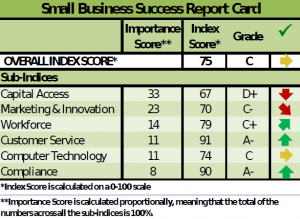
Andee Sellman, friend and occasional $7million7years contributor, refers to the Small Business Success Index study saying:

There are about 6.6 million home based businesses that generate at least 50% of the owner’s household income.

Now, assuming that home based businesses have either no – or very few – staff, I think that means that there are about 18 million home based businesses that are generating less then half the owner’s household income.

Now, think about this: the chances are that the whole household has a maximum of two full-time salaries – IF the owner of the small business runs it purely after hours …

… so, most home based businesses are making less than one full-time salary.

Let’s look at the most successful 6 million of these businesses: what are the chances that many of them are doing much better than “50% of the owner’s household income” – or, a maximum of one full-time wage (but, probably, much less!)?

Not much, I would think.

Now, there are exceptions: if you say that Facebook was a home-based business when it started … or, Apple … or, Google. But, most are just small online/offline concerns … low cost, low revenue, low return.

Chances are, you aren’t going to earn a lot from it, or sell it for a lot.

So, what’s the value of starting a home based business?

Well, unless you’re one of the very lucky ones, it’s in what you do with:

1. What you earn: this is extra income (assuming that you just haven’t thrown your old job in until it replaces your income … plus more) that you SHOULD be investing 100% of (some back into the business … some into outside investments, RE is ideal because the extra business cashflow can help fund any shortfall in the first few years), and

2. What you learn: there is no better way to learn about business than by running a business (preferably, with the resources of sites like Andee’s to help you); sure, my son made a couple of grand between the ages of 12 and 14 running his little eBay business from home … but, the lessons that he learned – not just business lessons, but Life lessons – will become priceless!

No, Michael Masterson’s 50%+ compound growth rate is reserved for businesses that can grow rapidly, have intellectual property that is both desired and protected, and have owners who are inspired by their Life’s Purpose to reach extraordinary heights …

… but, even the most humble home-based business can be a huge turning point in your financial life.

I highly recommend that you give it a go … and, keep trying until you find The One that helps you reach your Number 🙂

Punch Buggy Blue!

Let’s say that you do agree that real-estate is one of the best MM301 (wealth preservation) strategies … although, many of my readers would disagree …

[AJC: I’m happy to meet all the dissenters in, say, 50 years – at a very cheap restaurant, as they won’t be able to afford much more – to discuss how they went with their TIPS, bonds, cash and stocks-based retirement strategies. Then I’ll meet Scott, Ryan and all the other RE and business-based retirees on their private golf-course in Palm Beach for a second debrief 😉 ]

… but, what type of RE would fit the bill?

After all, many of my readers, Evan included, have had mixed experiences with RE:

I have watched my dad deal with C R A P for years. He owns 2 properties:
1) CASH COW – 2 family residential unit income exceeds mortgage payments. They always pay on time and there mostly are no problems

2) 2 family unit with a bar attached. I have listened to him say for YEARS, that if the bar paid its rent things would be different. I feel like the stress associated with this property is going to kill him eventually, and that is the commercial part.

In NY it takes 9 to 18 months to get someone out, so even if you try to evict you are looking at legal and time costs that could literally eat 6 months profit.

As I said to Evan:

That’s why we keep TWO YEARS’ buffer 😉

But, we all have a Reticular Activating System (RAS) that attracts us to whatever it is that has caught our attention … for example, have you ever played the Punch Buggy / Slug Bug game with your friends and / or kids?

If not, it’s a bundle of fun – and, pain. Actually, mainly pain 🙁

It works like this: who ever sees a VW ‘bug’ first calls out “Punch Buggy [insert color of choice: yellow, green, red, etc.] !!” and gets to whack the other person on the arm … as hard as they like [AJC: usually me. ouch!] …

It’s amazing how many VW Beetles there are on the roads, these days!

We used to play a similar game – many, many years ago – when I was on the school bus: we used to look for Chrysler Chargers, and whomever saw one first would yell out “Hey, Charger!” and hold up their hand with a Richard Nixonesque V-For-Victory sign.

The winner for the day was the one who scored the most ‘victories’ …

It’s amazing how many Chrysler Chargers there were on the roads, in those days 🙂

Of course, what’s happening is that our RAS is simply filtering IN Chargers (or VW Beeltes) and filtering OUT other types of vehicles, making it SEEM as though Chargers / Beetles are everywhere … of course, there are no more / less than there were before we started looking out for them.

Similarly, with RE – or other – investments:

Our view tends towards our first direct – or, even indirect – experiences; which helps to explain why my generation is more conservative (we went through some down cycles in the late 80’s and early 90’s) and younger folk were more bullish, having had 15 to 20 good years … until resetting their RAS’ in the current cycle.

Similarly, Evan’s views may be colored by his Dad’s experiences albeit mixed.

But, Evan’s Dad could have avoided many of his RE problems by buying well … now, for MM301, buying well is NOT the same as buying well for MM201:

While we are still building towards our Number, we need to buy RE that will appreciate strongly, with rents just covering cashflow (of course, we wouldn’t say “no” to more!) …

… but, when we have reached our Number, we need to generate INCOME, so buying well really means that we need to:

Buy to protect our future income / rental stream

As I have shown you, it’s easy to get a positive cashflow from RE; just pay cash!

And, live happily from 75% of the rents (less taxes), knowing that the other 25% will cover all of your ‘normal’ costs (management fees, vacancies, repairs and maintenance, etc.), and will keep up with inflation.

It’s the last part that is key: since we are never selling these properties [AJC: lucky kids!], we don’t really care how much/little the RE itself appreciates, we just care how much the rents appreciate, and our benchmark for this is:

The rents must appreciate at least as much as inflation

That is through both UP and DOWN markets …

… so, I would keep away from bars and other retail EXCEPT for counter-cycle retailers such as dollar stores, groceries / food stores (food staples only), and – of course – Walmart and Walgreens [AJC: if I could get my hands on the freehold!].

Remember, we’re not looking for extraordinary capital growth (any more), but protection in down-cycles.

[AJC: oh, and if you were going to buy stocks (again, for retirement capital protection and dividends); these types of retailers and food businesses would be great ‘protection stocks’ to own, as well]

And, moving away from retail, I would also happily buy small offices, say, housing a number of separate professionals (e.g. doctors, attorneys, etc.), as these professions are required in all markets and my risks are well spread.

But, I would avoid large offices – or industrial showrooms and warehouses – housing SME’s, as these are prime candidates for simply shutting shop in a down cycle, and I may only have one tenant per property (even though buying 6 or 7 of these would certainly help to insulate the ‘shock’)

And, you might be surprised to find that I am not all that excited about residential (even multi-family) for MM301, simply because the rental returns are usually not that great (but, they can make a fantastic MM201 strategy).

Remember, RE isn’t the only MM301 Wealth Protection strategy that you can base your retirement (or, life after work) around, it’s just that I am struggling to find another one that has both income and capital that can keep up with inflation, fairly consistently, through at least the 30 to 50 years that I still plan to be around …

… can you?