Are we all broke sheep?

[pro-player width=’530′ height=’253′ type=’video’ image=’http://api.ning.com/files/GLRPkozxKqsAOEDs*Rd06n1g0GC8wifx-HvjXsxwOlpn2Skpsbb8pRzsH82CNjTMI47lPVU2MHMBsp*V8xitlm6Ts5H*DgTL/BrokeTheMovie.jpg’]http://www.youtube.com/watch?v=N-4Z7xKq4lU&feature=player_embedded[/pro-player]

This should be an interesting movie [thanks to KC for the link!] … interesting because I’d love to know how they plan to fill up theaters with a documentary on the economy.

Expect it to be filled with wonderfully breathy comments like “Warren Buffett has more in common with a great poker player …” Oooooh! 🙂

A fool’s game …

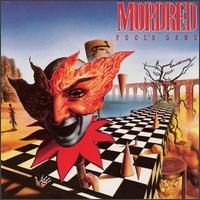
mordred foolsI’m hoping that after today, you’ll never look at stocks quite the same way again … first we need to go back to when Debbie asked how “the value of a company … translates to the price per share?”

Now this is REALLY key:

IF private companies (from your neighborhood hairdresser to the engineering firm in your local industrial estate) sell for 3 to 5 times their annual net profit (i.e. a P/E of 3 to 5), then

WHY do public companies (those traded on stock exchanges around the world) sell for P/E’s of 15+?

There are a number of reasons, but if you had to pick four they would be:

a) Convenience: you can simply buy/sell as much/little of the company as you like,

b) Regulation: by necessity, these companies are well-regulated by the various government overseeing authorities (e.g. in the USA it’s the SEC, amongst others),

c) Transparency: by law, companies are required to disclose everything about their companies so, in theory, the guy holding one share of the company knows as much about it as the majority shareholders [AJC: enter Martha Stewart!],

d) Liquidity: as Brandon said:

P/E ratios are all about liquidity. I can sell my stock in 30 seconds but good luck selling a business in under 6-12 months.

If I had to boil it down to just one factor, I would say that Brandon is right: it’s all really about allowing people who don’t know what they are doing to get in and out really quickly.

Now, think about this: even though, I have never seen this explained quite this way [AJC: so, perhaps I’m the idiot here?!], to me, it explains why (i) Warren Buffett is the richest man in the world, (ii) the best fund managers around can’t ‘beat the market’, and (iii) why the typical investor averages less than 4% return from the stock market and would be better off just leaving their money in cash:

People pay FOUR TIMES WHAT A COMPANY IS REALLY WORTH just for the privilege of not having to worry about getting in and out!

Read that again … before you buy your next stock 🙂

So, stocks have TWO values:

1. Their ‘intrinsic value’ i.e. what the underlying business is really worth, and

2. Their ‘market value’ i.e. what people are willing to pay for the privilege of throwing them around like casino chips.

Traders and speculators (and, aren’t we all?!) buy on the second … but, true investors (e.g. Warren Buffett) buy on the first.

Warren Buffett, and a relatively few investors like him, don’t care about the advantage of getting out quickly … they deal with that by avoiding selling! Sneaky, huh?

So, ‘value investors’ like Warren Buffett look at what a business is really worth, and buy it when it’s at that price LESS a margin of safety (they usually try and buy when the current stock price values the company at 50% – 80% of the ‘sticker price’ i.e. what their discounted future cashflow analysis tells them the company is really worth).

[Hint: because of some of the other advantages that we mentioned, it’s usually when the P/E is around 8]

So, think about it: Warren buys when the stock is valued at much closer to what he thinks the underlying business would be valued at if it were a private company (like that hairdresser) … then, he sells it – if he sells at all – to all of those other suckers out there when the stock gets up to normal valuations: for ‘normal’ read ‘sucker’ 😉

That’s why Brandon also is right on the money -literally – when he says:

That’s why the holy grail for private equity firms is the IPO. Buy a company at 5-10x earnings and take it public for a valuation of 15-30x.

Now, THAT’S a way to make a quick buck …

… but, hang on: if they are MAKING a quick buck selling at 15x – 30x valuations, what are WE doing when we are BUYING AT THAT PRICE?!

When will you be a millionaire?

Last week, I posed the question: how much should you have saved by now?

With the general consensus being that pre-packaged formulas such as “6.1 times your current salary by age 50” mean a hill o’beans because:

a) the best these ‘common wisdom’ formulas will get you to is just over broke by the time you work to 65 (and, not a day before!), and

b) they fail to take into account that YOU need to have saved enough to ensure that you’ve reached Your Number by Your Date.

The corollary question is “when will you be a millionaire?”, one which  CNN Money attempts to answer with this neat online calculator:

Picture 1

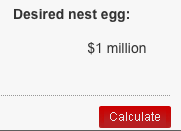
The problem with this calculator is obvious … but, in case you missed it, I blew up the bottom-right corner of the above image for you:

Picture 2

Your ‘desired nest egg’ – in this calculator – isn’t variable … it’s One Million … that’s it!

My issue is that plenty of people (fortunately, none of them readers of this blog) – with the support of an ‘authority’ such as CNN Money – still think that $1,000,000 is something to aspire to!

If $1 million isn’t just a hurdle along the way to your Number – and, a fairly early and relatively small hurdle at that – then you are destined for a VERY late retirement or an early trip to the ashram to meditate all day and eat rice at every meal … not that there’s anything wrong with aspiring to Asceticism 🙂

Adrian

PS I’m sure there’s plenty of other online calculators that will do the job, although I couldn’t find one that accepts >20% annual return and we know that we need more than that! If you find a good one, please post a link in the comments.

Now, that’s hard to bottle!

Over a couple of posts, I posed the question: is your partner worth $5 mill.?

Through some suspect mathematics, I ‘proved’ that partners aren’t worth the price you have to pay (in lost equity) UNLESS they are the ones with The Big Idea!

I bring this up, because a reader (who shall remain nameless, as business plans are currently in motion!) told me:

One of my clients-turned-friends is doing the coding [for my new site].  This was an idea we’ve tossed back and forth for a couple years… he was one of my first clients.  [I worked on his previous] site for 2 years or so, then helped him find a buyer who paid a couple MILLION for the site.  I got a $5,000 bonus…  then we worked on [another site] for a year or two.  I helped him sell that, but for something in the hundreds of thousands rather than a couple million but he gave no bonus! I was a little peeved! I mean, sure, the bonus wasn’t a requirement but … you know, it was sorta expected.  I couldn’t very well say – where’s my bonus?  A couple weeks later he asked if I was interested in collaborating on the project we’ve been tossing back and forth the ideas for, we worked out some stuff and he’s outlaid all the costs and most of the time to get it going.  [W]e’ll barely see 15% of profits [each] when all is said and done  …

[AJC: I had to ‘square bracket’ a bit to protect the innocent … but, you should be able to get the picture?]

I told this reader that this guy has a track record, and 15% of something that costs our reader nothing could turn out to be something worth while! I said: “I guess that’s his bonus ‘gift’ to you ….”

This is the real value of a partner – besides providing the ‘Big Idea’ – if they are the true entrepreneur and you are more the ‘worker bee’ type, then a partnership MAY be the only way that you’ll get a business up and going …

… you see, this guy – and, this is true of many successful entrepreneurs – can show a track record of:

(a) spotting winners i.e. good potential business opportunities, and

(b) spotting winners i.e. good potential people who can help him make them happen.

The ability to spot winners is all that it can take … BUT, that’s a rare skill that’s very hard to bottle 😉

I want my share!

What is a stock? What is a share? Are they interchangeable, and who even cares?

Well, Debbie does … asking on the Share Your Number community forum:

I understand why you would need to have a good idea of the value of a company if you plan to buy stock in that company – But I don’t understand (and I’m sure this is stocks 101) how that translates to the price per share.

Even though this blog isn’t about Stocks 101 … there are plenty of other places on the web to find that sort of info … this does open up some interesting questions:

For example, even though I owned some of my businesses 100%, they were structured with lots of shares (usually between 100 and 1000).

Why?

Well, ‘just in case’ …

… it makes it easy for banks, partners, JV’s, partial sales, etc. to buy in – just transfer them a % of the shares: if you have 1,000 shares (or 100, it doesn’t matter … larger numbers just have more divisors and the ability to make finer and finer ‘cuts’ of the company value) and they are buying 40% of the company, you just give then 400 (or 40) shares.

Simple!

If you want to be sneaky, you create two classes of shares: A (say, 600 of the shares) and B (the rest), with the voting rights going to the A stock, which you – naturally – keep. You get to sell 40% of the company to some sucker and keep 100% of the control (actually, 60% still should give you majority control, so it’s not such a big deal, anyway)!

Unfortunately, for my New Zealand Joint Venture (fancy term for ‘partnership’), where I owned just 40% of the stock, that wasn’t possible … and, for my US JV, where I ‘controlled’ the company with 51% of the stock, there were so many “by unanimous agreement” clauses written into the shareholder’s agreement, I couldn’t blow my nose without seeking my partner’s approval, first 🙂

So, the first lesson we learn about stock is that numbers and/or percentages CAN matter less (or more) than you think … it’s all in the fine print 😉

Public companies are the same, except that they are usually (a) huge, and (b) divided into LOTS of small pieces (1,000,000+) so that people can buy very small chunks of the company, and trade them very easily i.e. for small sums of money.

These shares/stocks are traded on public stock exchanges, which are heavily regulated to make up for the fact that ‘idiots’ like me buy small pieces of businesses without the effort or forethought that they would put into buying the WHOLE business: we take all the risks without any of the business controls.

Stupid!

And, that’s why the stock market is more akin to a casino than to ‘real’ business or investing … we have no control, and only limited understanding of the underlying business that we are – in effect – buying into.

Now, here’s Josh to answer the second part of Debbie’s question (“how that translates to the price per share”):

If you think a company is worth 1 billion and there are 100 million shares outstanding, the price you think the shares are worth are 10 dollars each. Of course you want to wait until you have the opportunity to pay less then this.

So, if you would be willing – that is, if you were Warren Buffett instead of Jane Doe – to buy the whole company for $100,000,000 and it had 1,000,000 shares, then you should be willing to buy one (or each) share for $100. Except, Warren reads the financial reports and calls the shots, while we read Money Magazine and wait patiently (what other choice do we have?!) for our dividend check 😉

This leads to some other key numbers:

In a private company, we have sales and profits.

In a public company (i.e. traded on a stock exchange), we also have sales (or ‘revenue’) and profits (or ‘earnings’), but we can now also divide each of those by the number of shares available to come up with numbers like Revenue per Share and (more importantly) Earnings Per Share.

Also, if we COULD buy the whole company for $100,000,000 and it had a 25% profit margin, then for each $100 share we buy, we would expect $25 in company profits … which means the company is now selling for a Price/Earnings Ratio of 4.

Which leads me to the Grand Mystery of the Stock Market:

If a P/E of 4 is right on the money for a private company (they typically sell for 3 to 5 times annual profit/earnings) why is a P/E of, say, 15 for a publicly traded stock the ‘norm’ and a P/E of 8 to 12 times earnings so damn cheap that even Warren Buffett might buy the stock by the truckloads?!

[AJC: I know the answer … but ‘knowing’ doesn’t make it right 😉 … do you know the answer?]

So, Debbie – in case you’re worried about asking a 101 question – please remember: there’s no such thing as a bad question, only a bad answer 😛

How much should you have saved by now?

datesThis is rapidly appearing to become a blog about your Number … of course, that’s not the case: it’s a blog about money, specifically about how to make $7 million in 7 years, but you can pretty quickly see that having a real financial goal in mind is a powerful focusing tool.

It’s also a ‘comparator’ – a tool to use whenever you are presented with two financial alternatives … for example, Scott who is deciding how many clinics to open: 1, 2, or 3+ [Hint: only one of these is the right answer, and it’s not the obvious one!] … it was ONLY by having a clear understanding of his Number / Date that he came to this conclusion.

Without that understanding, Scott could have made a terrible (OK, far better than terrible … more, non-optimum) decision that would have had the opposite effect to that intended: it would have committed him to working for 10 to 20 more years.

So, now that I have provided the hint, let’s look at today’s conundrum, posed by Money Magazine in March 2008: how much money should you have saved by now?

Well, given the current market the chances are that what you have saved has halved, but what you should have saved hasn’t … bummer 🙂

But, here’s what Money Magazine advises; to see how much you should have saved by now:

If you are age 45 multiply your current salary by 4.1
If you are age 50 multiply your current salary by 6.1
If you are age 55 multiply your current salary by 8.5
If you are age 60 multiply your current salary by 11.4

So, if I said my current salary was $250k (well, that’s what I most recently paid myself before I retired), then I should have saved $1.525 million by now …

Can you see the obvious problem?

Well, it assumes that I am going to want to keep working for another 15+ years!

Why? Simple: $1.525m can only support a ‘safe’ 5% annual withdrawal rate of $76,250 (before tax) … so, unless I want to take a HUGE pay-cut, I’m going to have to keep working until I’ve saved at least $5 million … lucky that’s exactly what I did 😉

So, here’s how you should calculate how much you should have saved by now:

1. Calculate your Number,

2. Decide your Date,

3. Subtract your Current Net Worth from 1.

4. Subtract today’s date from the Date

5. Divide 4. into 3.

That’s how much you need to have saved each year between now and your Date, if you want to reach your Number.

Now, you can get fancy and use an online compounding calculator to do the year-upon-year calculations, but this is a good place to start.

When is a partner not a partner?

taxi policeLast week I called out that I had an over-supply of business ideas, simply because I don’t need them [AJC: I am meant to be retired, you know?!] …

… much like taxis and police who are never there when you need them, but seem to pop up everywhere when you don’t 😛

Brandon proposed a possible solution:

I think I remember you saying you don’t like partnerships but you could buy it with your friend and have him run it day-to-day. If he can still assure you of those numbers when he has skin in the game then it’s a smart in my opinion.

Sure, it’s a potential Making Money 301 solution for somebody who is not quite ready to fully let go of their business – or wants to dabble as a ‘hobby’ (as in my case) – without needing to be fully hands-on i.e. become a ‘silent partner’.

I have a friend who started off as a competitor (I have a whole string of competitors-turned-friends, but that’s a whole other story) and ‘retired’ when I did, but unless his Number was miniscule (in terms of the annual lifestyle income that he can draw off it), he can’t really retire whereas I can (he made $3 mill; put $1.8 mill. into a house; bought a couple of cars and so on, which leaves him about $800k to ‘live’ off … not possible for someody who lives in a $1.8 mill. house!) he needs to work again.

So, he’s looking to buy a business and have me invest 50% ‘silently’ … except that I’m not investing in any businesses as a MM301 ‘passive investment activity’ as I don’t believe that there’s any such thing as a ‘passive business’ – and, very few truly ‘passive investments’.

Now, that brings me back to my ‘retirement businesses’:

They aren’t part of my MM301 portfolio … they are the ‘travelling … mentally’  part of my Life’s Purpose; in other words, I wouldn’t like to LOSE money on them, and I’d really be happy if I actually MADE money on them, but their real purpose is to exercise my mind: an expensive form of Sudoku 🙂

So, my strategy is to do a LOT of them and invest only a LITTLE (financially, emotionally, and physically) in each …

… which brings me back to Brandon’s idea to invest with my friend who is already the CFO of the business that I mentioned in that post:

– One of the reasons why I am considering the business is that it has an excellent management team (once the owner/founder is removed) whom I feel would perform well with minimal supervision, but a lot of strategic direction,

– I don’t want to have partners – even my friend – for a lot of reasons, the most pragmatic being the power afforded to minority shareholders (i.e they may only own a small % of the shares, but that can be enough to make them a real pain in the butt if things go awry),

– Yet, I want to incent them to profitably grow the business.

So, the solution may be Simulated Equity [AJC: a term that I just made up 🙂 ] … here’s how it works:

There are two financial benefits of stock ownership for employees:

1. A distribution of profits, and

2. A growing asset, redeemable upon sale of the enterprise or their stock, whichever comes first.

The first one is easy: having, say, 5% of the stock in the company affords you 5% of the DISTRIBUTED profits; that means the Board of Directors (and, as a minority shareholder, you may or may not get a vote here) decides what % of profits made that year should be distributed to the shareholders and what % should be kept to help grow the business.

The problem with the second is that the employee may receive the stock, but can then sell it whenever they wish (after any exercise and / or vesting periods) … where’s their incentive to stay and grow the business once they’ve sold their stock?!

My solution – ‘simulated equity’ – is simple:

I will offer each key employee (e.g. my friend):

a) A profit share – this means that the employee might get 5% of all of the profits earned EVEN if the Board of Directors decides not to distribute all profits that year (in other words, the employee gets their FULL 5% share), and

b) A bonus on sale – I might offer a, say, bonus equal to their profit-share percentage of any sale price of the business. This way the employee gets an incentive to stay on and help with the eventual EXIT PLAN for the business … good for me, great for him!

In other words, the employee gets the financial benefits of ‘partnership’ … in return, I get a committed employee who benefits in proportion to my benefits … and, I don’t lose any control!

What do you think?

Are these people aiming high enough?

On Monday I wrote a post about ING’s Retirement Number Calculator … then I found this YouTube video showing their sponsored Georgia Marathon participants carrying their ‘Numbers’,  presumably as a marketing ploy …

… I noticed something really interesting when I watched it. I wonder if you did, too?

What I noticed was that the Number for most people, was around $1,000,000 (and, the largest that I noticed was $1.8 million) … would this be enough for you?

Diversification [does NOT equal] Bankroll Management!

Even though guys like Tom Dwan (a.k.a. Durrrr) can run up a $200 starting bankroll to over $10 million in 3 or 4 years playing poker online, I don’t recommend this as a serious ‘investment’ strategy!

Nor, do I recommend simply dumping your entire portfolio (401k included) into just one stock pick, as Josh has done ….

… even though both Tom and Josh are both ‘big winners’ … so far 😉

That’s why I recommended – for those amongst my readers who insist on traversing the high-wire of their financial life (there ARE rich prizes at the other side, IF they make it, so who am I to say “don’t!”???) – a simple three-part strategy to protecting their finances, by taking:

1/3 of any ‘windfall gains’ for spending (presuming that the speculation activity is their primary source of income);

1/3 of any ‘windfall gains’ to fuel a parallel ‘passive income’ investment strategy; and,

1/3 of any ‘windfall gains’ for their trading activity (this could be trading stocks/options; developing or flipping real-estate with little money down; etc.; etc).

If the person has another (reliable) source of income, then any ‘windfall gains’ can simply be split 50/50 between ‘speculation’ and ‘passive investments’.

Of course, this will slow down growth, which is why Josh still wants to:

Go 100% 401k and 200% brokerage … [because] sometimes the opportunity is so obvious and risk so low

Spoken like a true Most Probably Will Go Broke Someday Trader!

This strategy is just there to protect the Josh’s of this world in the unlikely event that they should miscalculate ever so slightly 😉

Look, I’m not going to attempt to teach anybody anything about trading, but it’s always good to remember: it takes just ONE bad piece of news on a ‘volatile stock’ (bad ceo, drug that doesn’t get FDA approval or shows unexpected adverse side-effects, law suit) to override the fundamentals.

It’s the equivalent to a ‘bad beat‘ in poker (a.k.a. ‘variance’) … they are inevitable in poker – and, I would argue, also in trading – and you survive them by good bankroll management …

… after all, there are still Enrons out there that people are trading up every day 🙂

On the other hand, Jeff throws a curve ball:

Looks like you have changed your stance a little on diversification. [http://7million7years.com/2008/12/19/the-allure-of-diversification/, where you don’t recommend diversification due loss specialized knowledge and consigning yourself to average returns]

I’m interested why you made the shift…

As I said to Jeff, this may appear to be a shift, but it’s not …

Diversification ≠Bankroll Management!

… for example:

– if Josh said that he was going to invest 100% in buy/hold cashflow-positive real-estate, I would say “go for it”

– if Josh said that he was going to invest 100% in an existing profitable business, I would say “go for it”

– if Josh said he was going to invest 100% in 4 or 5 stocks that he felt were undervalued and was prepared to hold for the long-term, I would say “go for it”

… but, I would say that if the future income stream is in any doubt (e.g. if it is a royalty, or speculation, or short-term investment) to divert some of the cashflow produced from profits (capital gains and/or operating profits i.e. one of the ‘thirds’ that I mention above) and use those to start creating your own Perpetual Money Machine: that’s VERY different from the standard type of diversification that most financial advisers talk about.

When you need a taxi …

It’s interesting, one of the major obstacles apparently standing between many people that I talk to and a few million dollars is the want of a ‘killer business idea’ … or, even ANY reasonable business idea.

But, that problem magically disappears when you wake up one day to find a spare few million in your bank account … people-with-ideas seem to just spring out of the woodwork.

You know how you can never seem to find a cab when you need one? 😉

Well, it’s been nearly a year since I’ve found myself with both a lot of spare change and nothing of substance to occupy me during the daylight hours …

… a little less than one year and I have:

– Three blogs,

– Three Web 2.0 internet businesses under various stages of development

– A Fourth one under negotiation to buy into

– And, just yesterday a new business opportunity was presented to me.

This last one is interesting because it is a ‘bricks and mortar’ business (with an internet sales site as an adjunct):

It’s interesting because a friend of mine is the finance director and has spent the last two years of our time together complaining about the excesses of his boss, the entrepreneur/owner/founder …

… without giving away too much, the guy developed a business around an innovative niche product with a strong brand name that was even featured on Oprah (as one of her ‘favorite products’), resulting in a business generating $2 million to $3 million profit per year in the USA and overseas.

Yet, through excess (taking all the profits out of the business), divorce, and mismanagement this company is now barely breaking even in the face of declining sales. From what I can see, even though the product is no longer unique, the reason for the sales drop is the management of the company rather than product or market issues.

So, I have an indication that the owner of the business will sell for:

– $400k up front cash, plus

– $350k to pay off a personal loan, plus

– $150k to $200k per year for the next four year (sort of a ‘deferred payment’).

By my reckoning, this is $1.55 million …

Now, here is where it gets interesting:

– The business has an excess of money owed to it (accounts receivable) LESS amount owed by it (accounts payable) of about $200k, and

– Inventory worth $800k+

Provided that the receivables can be collected (my friend, the CFO assures me that it can) and that the inventory can be sold close to book value (he assures me it can), I am essentially buying the ‘goodwill’ of the brand-name + suppliers in place + distribution network in place + staff in place for a globally recognized niche brand for a little over $500,000.00

So, there’s two ways to look at this:

– A brand in decline, so the owner is selling out while he can still salvage some value, or

– A ‘vulture’ opportunity to buy a no-worse-than-break-even business + established international brand (endorsed by Oprah, no less!) for only $500k.

What to do? What to do? Hmmmmm ….

I’d love to hear your ideas!