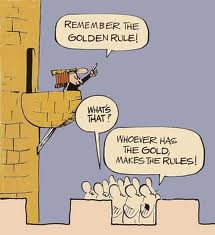
I think, by now, we all agree:
Credit Cards = BAD
I mean, that’s pretty much Personal Finance Kindergarten, right?
Why pay 19%+ interest for something that just goes down in value (like that 3D TV)?
But, why do I pay all my bills – both work and personal – by credit card.
I’m sure the answer’s pretty obvious to all and sundry: it’s for the points, man!
Yes, even millionaires like to get free stuff …
…. and, Sugardaddy outlines on NetworthIQ exactly how he does it:
1) Assuming that you pay your bills on time, most of the time, put all routine expenses on your credit card…utilities, groceries, etc.
2) Set up an automatic bill payment plan from your checking account for the card online.
Result:
1) you get a 30-day free loan.
2) you get free credit card points that are worth real money.
3) you increase your credit score.
4) you consolidate all your bills in one payment
5) You will never have a late fee and the APR will never concern you.
6) You will always watch your checking account balance like a hawk as failure to have enough in the account IS NOT AN OPTION.I have done this for 10 years and it works like a charm…I get all my video games for “free” from Best Buy, and beat the banks at their own game.
Life does not get any better than that.
But, there’s always a catch in Life, Sugardaddy
The one, here, is that the credit card companies HOPE that you forget to pay your bill on time, then you get to pay interest from the date of purchase.
[AJC: actually, they've already made their $$$$ from the Merchant Fee - believe me, I understand this side of the business VERY well - but, that 19% they get from you is just sweeeetttttt]
So, I add a few more steps to this otherwise inspired plan:
7 ) See 6)
8 ) See 6)
9 ) See 6)
10) See 6)
Point made?
Great, because I, too, have been doing this for years.
My assistant puts all ‘work’ expenses through my personal credit card (needless to say I have a LARGE credit limit), and my wife does the same with our home expenses.
Both ensure payment in full each and EVERY month.
Having done that, later this year I’m traveling ’round the world first class [AJC: I'm told that First Class on the new A380 entitles me to my own/private room on the 'plane!] … fully ‘paid’ by points.
Sweet
If you want a business but don’t know where to start, think about monetizing your passion.
By that I mean, find out what it is that you like to do in this world (golf? personal finance? knitting?) and parlay that into a business.
Here’s somebody who turned a passion (and talent) for jewellery made from twisting little silver-plated wires into a $600k+ p.a. online business that teaches others how to do the same!
That’s why I recommend that you start today …
… whether you have any idea what/how to start your business or not, start by writing a blog.
It can tell others how to do whatever it is that you do (if you are already an expert), chronicle your own journey to ‘expertness’ (great way to get started, even if you don’t know much about your passion at all), or it can simply be a collection / review of others who are experts.
Down the track, you’ll have enough randomized blog entries to create some of your own information products … all neatly reviewed, scrubbed, and honed with the volunteer assistance of your readership.
What do you think I’ve been doing with this blog all of this time?
Seriously, if you think this is hard, check out this story of a 9 y.o. who decided to (successfully, I believe) help pay for his own heart operation by writing/selling an e-book:
http://steve-olson.com/9-year-old-helps-pay-for-own-heart-surgery-by-publishing-estory/
Inspirational, true story even without the business/money lesson that I had to wrap around it!
Phil’s a great speaker and this is a great story; it tells you where Rule # 1 comes from.
BTW: if you’ve read / got / intend to buy the book, this spreadsheet will help you apply the ‘rules’:
… don’t.
If you don’t understand why lying to anybody about anything is a Very Bad Thing, please unsubscribe from this blog … I don’t want to financially arm a lying, cheating scoundrel, you’re dangerous enough without money
This could be my shortest post ever, so let me pad it out with a very-slighty-related anecdote:
One of my friends was offered a promotion, so he had a ‘salary negotiation’ meeting with the CFO of the company (also a very nice guy and also a personal friend, which makes this all the more funny to me).
After a suitable opening discussion, the CFO reached into his briefcase and pulled out an Offer Letter with the proposed new salary on it, and signed by the CEO.
Pretty official … end of discussion.
Except the payrise was trivial (like 5%) and involved a relocation; naturally, my friend pointed out to my other friend (the CFO) how inadequate the payrise was.
No problem.
The CFO merely reached into his briefcase and pulled out a second letter! Neatly typed and also signed by the CEO … sneaky, huh?
Only problem was that this offer was still too low, and my friend told him so.
No problem.
The CFO reached into his briefcase and pulled out a third signed letter!
I wonder how many more signed ‘official’ letters were sitting in there?
Unfortunately, we’ll never know because my first friend stopped there and my other friend (the CFO) ain’t telling.
If there is a message in all of this: negotiate the hell out of all job/business opportunities (without being a pain the the a…), but please don’t lie about it.
Where I fear to tread, Bargaineering boldly ventures; proudly proclaiming The Billionaire Secret: Avoid Ordinary Income, Acquire Capital Gains.
I won’t presume to tell you anything about being a bil-yun-air until I are one, but that doesn’t stop others from trying; Bargaineering says:
The key to building wealth is to build or buy an asset that can appreciate in value and/or generates passive income. The key to building or buying an asset that can do that is to convert your labor into capital (money). This is why saving for retirement, saving for a home, and saving in general is such an important piece of your personal finance plan. This is the billionaire secret because this idea is well understood by people who are wealthy. They see that capital gains taxes are much lower than ordinary income, that’s why Warren Buffet pays lower tax rates than his secretary. Capital gains are taxed at 15% for 2010 while the 15% tax bracket is the second lowest federal tax bracket (for those earning up to $34,000). It’s a no brainer, you want to transition, as quickly as possible, from ordinary income to long term capital gains and dividend income.
Have you ever seen those magic shows where the magician pulls some random guy out of the audience and gets him to try and copy what the magician is doing?
Presto!
The magician accomplishes some amazing feat and the other guy (gal?) ends up looking like a shmuck …
Well, that’s kind’a like what’s happening here – in fact, with most PF authors who write ‘get rich’ stuff. They are working by what they THINK they see other (real millionaires and billionaires) doing.
And, they see Warren Buffett playing with capital and saving on taxes and … presto!
“Convert your labor into capital (money)” and “capital gains taxes are much lower than ordinary income”, so “it’s a no brainer, you want to transition, as quickly as possible, from ordinary income to long term capital gains and dividend income”.
So, it’s a no brainer that you do all this (because the Billionaires DO do all of this, I think) and you’ll be standing there in 5 to 10 years as a poor shmuck.
Why?
You’ve missed the point entirely: how the trick is done, because it’s done behind the scenes … Bargaineering can’t really see it and neither can you.
Not because these billionaires are hiding anything (well, they probably are hiding at least a little) – unlike the magician who can’t afford to tell, not even once – but, because they have much more important things to do than write books and blogs.
So, from a multimillionaire’s perspective rather than a billionaire’s, let me share what I think is going on:
1. While you are trading hours for $$$ you lose
This is why I chose NOT to become a highly paid consultant, way back when I was a world expert (speaking tours and all) in my little niche. Don’t trade a limited commodity (time) for an unlimited one (money); you only have 40 to 60 hours a week to trade, no matter how much per hour you think you can pull, yet money is just bits of paper that Uncle Sam prints by the trillions.
Fortunately this one is simple: start a business; start investing … make your little bit of time and money work as hard as possible, until the money – on its own – starts to make more money for you. I think you can extrapolate?
2. Capital is better than income
But, it’s not for the tax-advantages … I don’t do anything BECAUSE of the tax advantages (for one, Uncle Sam loves to change those rules at the drop of a policy change); I simply take ‘em when they come.
But capital is a tool for creating income; it’s a little like that time/money thing. The best you can do is create your perpetual money machine: use your income to buy a little capital (real-estate is nice) which generates more income (from rents, after mortgage and other costs) which you pump back into buying more ‘capital’; repeat until rich!
Finally, Bargaineering says:
While the 2% you can get at a high interest savings account isn’t going to set you for retirement, that income represents your money working for you. The problem with this approach, at least for the long term, is that interest income is considered ordinary income. It’s taxed at the higher rate, which makes it a bad idea.
Do I really need to explain why the problem here is the 2%, not the taxation rate?
None of this get rich(er) quick(er) stuff works, if you don’t get your annual compound growth rate to infinity and beyond … well, at least to 15%+++
I feel so privileged to be in the blogging company of a billionaire …
Guerrilla Billionaire [AJC: who, presumably is so humble that he doesn't even pay $12 at GoDaddy for a real domain name, prefering to use: the free one provided by Typepad ... so humble, it brings tears to my eyes] offers a course on How to Become A Billionaire.
Thankfully, he also provided a link to an article written by a guy who interviewed a REAL Chinese billionaire 5 or 6 times:
It seems that this Chinese Billionaire’s ‘secrets’ are along the lines of being humble (he started as a peasant boy), being nice to everybody (you never know when the next peasant will become your competitor, financier, or business partner), being scrupulously honest (apparently, there’s a way to be unscrupulously honest that, so far, I am blissfully unaware of), and to leave plenty of meat on the bone for others.
Of these, perhaps the last is the only ‘real’ secret that I can see in all of this (5 interviews and no secret business or money management techniques?!) … or, at least the only one (other than being honest) that I can relate to:
In my latest property development deal, I am sharing 25% of the project profit (plus a $200k fee) to my partner who is essentially doing nothing other than project management … he’s not putting a penny into these deals (I’m paying him $200k + 25% on each): I’m funding 100%.
I could hire an experienced building project manager for less than the $200k fee alone, yet I am potentially giving away millions to this guy.
Why?
Well, part’s the ‘honesty/ethics’ bit: he did find me one of the pieces of land that I aquired and pointed me towards the real multi-story condo development potential of the other (I had a much less lucrative project in mind); not to mention, he helped me with the rehab of my house.
But, that’s not quite the full story: while I don’t normally like partners – in fact, have never had one before – this is a whole new thing for me … I know nothing – nada – about property development, having always been a buy-and-hold guy. Again, I could have bought in the expertise, but that may not be the same as having somebody that I can (hopefully) trust who now has skin in the game.
We shall see if this strategy works; and – given how much I have already learned (property development is EASY) – whether I will go it alone on any future projects.
But, there’s a LOT to be said for not looking at how many beans are on the other guy’s plate: if you’re hungry, and you’re also eating beans, who cares?
Oh, as to the billionaire course, I won’t be taking it – even though I probably need an instructor for Making Money 401.
Fortunately for you, you already have a bona fide multimillionaire to guide you through MM101, 201 and 301 …
… even if I’m not very humble – at least as far as this blog, using my semi-anonymous AJC identity, goes,
… here it is.
All the inspiration that you will ever need to get started NOW.
You decide that you need a new TV because your old one blew a tube (do they still have those?) and watching the blank screen is a real bummer.
You check your budget then the catalogs and decide that $900 is a reasonable target price for the type of TV that you want, so you trundle down to Best Buy [AJC: Ka-ching! That's another $1,250 for product placement. Whoohoo!].
Luckily they have the TV you want at only $850 … better yet, with your $50 Best Buy Rewards vouchers [AJC: + $350 Voucher Mention Bonus] you get the whole kit for $800.
So, what should you do with the $100 that you just saved?
That’s the question asked (and, comprehensively analyzed) in a guest post on I Will Teach You How To Be Rich on The Psychology of Money Savings, where the author talks about this as “the last mile of saving”:
So you’ve cut back your car insurance, negotiated a lower interest rate on your credit card—or nabbed a great deal on a new TV. You’re congratulating yourself for being a smart saver, and keeping more of your hard-earned money in your pocket.
Peter Tufano, professor of consumer finance at Harvard Business School, says that many people confuse a lowered rate (on car insurance), or getting a discount (25% off a TV) with saving money.
You can thank a psychological phenomenon that economists have dubbed malleable mental accounting.
C’mon, this isn’t a ‘mile’ … it’s barely a savings ‘inch’: you haven’t ‘saved’ anything … you’ve just spent 800 bucks.
Simple!
If you really want to think about saving, treat the $100 that you ‘saved’ from your original (actually, notional) $900 budget as ‘found money’ and save 50% of that.
Better yet, vacuum the dust off the back of your TV from time to time and maybe it won’t overheat and you’ll be able to ‘save’ the entire $900.
Got it?
Happy Holiday Weekend – which is now already fading as a distant memory of fun and relaxation, as your work cubicle begins to close in on you ….
… although I’m still (technically) on vacation, I’m cutting my blogging-vacation short out of sympathy and because I’m just bursting to share this post with you
Sarah Winfrey – on Wisebread – provides her 5 Steps Toward Financial Independence … I want to share them, then rework them slightly for you.
First, Sarah says:
Whether you’re a brand new grad or regrouping after a layoff or other financial difficulties, you may find that it’s more difficult than you’d imagined to wean yourself from any monetary help you’ve been getting.
1. Get a Job
2. Know Your Expenses
3. Commit to Saving
4. Prioritize Essentials
5. Give Yourself a Deadline
It’s generally good advice, and you should read the whole article here, but this wouldn’t be $7million7years if we didn’t have our own take on things:
Losing your job (or graduating college and finding it hard to find that ideal, first grad. job) shows you how fickle the world of employment can be. There’s no safety in employment any more, so you may tempted to become your own boss. But, there’s no safety in business either!
Look, I love the idea of people going it alone and starting a business, but a job provides three things that you might need:
- Cash to live off
- Starting capital for business and/or investing (your ‘war chest’)
- A safety net, in case your first business or two fails.
So, I recommend that you go ahead and get a job … and, start that business on the side!
This one is easy … if you try the ‘no budget budget’ ( http://7million7years.com/2009/05/04/i-hate-budgeting-so-ive-only-ever-tracked-my-expenses-once/)
Hopefully, you already tried this – when (if) you were working – but, now’s a great time to try this again … just for one month.
Now, this should be easy: if this is your first job, then you’re used to living off nothing, so 50% of something must seem like a HUGE payrise to you. Regardless of whether this is your first job, or you are reentering the Rate Race (I mean, work force), you should treat this as Found Money and aim to save 50% of your income.
If that’s not possible, work your way back from 50%, all the way down to 1% if you need to …
… just remember that your eventual target should be AT LEAST 10% of your net income over and above whatever goes into your 401k.
Why?
Remember that business/investing war chest?
You need access to your money, so start building your savings outside of your 401k, as well as continuing to fund your 401k. But, you should simply treat anything that goes into your 401k as a safety net, much as a high-wire artist treats their safety net as something that’s there but NEVER to be used … except if you fall!
Remember that ‘no budget’ budget?
Now’s a great time to go through it with a fine tooth comb and identify any excesses … and, eliminate them.
And, to help you stop spending money unnecessarily, it’s time to stamp out that Impulse Buying Bug once and for all!
The best tool that I have found to help you do that is the Power of 10-1-1-1-1 card, which should be laminated and sitting in your pocket – well worn from overuse: http://7million7years.com/2009/04/23/the-even-greater-power-of-10-1-1-1-1/
Sarah means this as a deadline for getting your financial house in order, but $7million7year readers have a much more important deadline: Your Number / Date.
In case you missed the last three years of posts, here’s where to find:
- Your Number, and
- Your Date.
By the time you work all of this out, you’ll be in a hurry to get a job and start your active business/investing program
I’ve packed my rod’n'reel and I’m travelin’ for the next couple’a weeks …. be back soon, y’all y’hear?!